Compare
Antler vs Techstars (2026): form a team from strangers, or accelerate the team you have?
Antler starts with individuals and gives them weeks to form a team. Techstars starts with a company and judges the team before anything else. Here is how they differ, from their own pages checked on 14 November 2026 (Antler's UK page again on 18 November) and from founders who went through each.

On this page
- Side by side
- "Which one offers the better deal?"
- The short answer
- Do you and your cofounder want investors at all?
- What Antler is
- What Techstars is
- How Antler works, step by step
- How Techstars works, step by step
- Getting in: what each one looks for
- Time, place and commitment
- Solo founders and cofounders
- What happens if you don't have a team
- Community after the programme
- What founders who went through it say
- Who each one fits
- Foundinity: find your cofounder before you apply to either
- Which should you choose?
- FAQ
- Sources
Side by side
| Antler | Techstars | Foundinity | |
|---|---|---|---|
| What it is | An early-stage investor that runs residencies; says it is "not an accelerator or incubator" | A network of three-month accelerators, each run by a city or an industry partner | A cofounder matching platform |
| You apply as | An individual or a team | A company, with its founding team | Yourself; no application |
| Stage | "Even before they have a team or idea" | "Nothing is too early", but the accelerator is "designed for startups that are ready to scale and fundraise" | Before you have a cofounder |
| Cohort | About 100 founders (Continental Europe); the UK page no longer gives a number | 50 startups across 7 programmes in spring 2026, 5 to 8 each (our count) | Not a cohort |
| Length | Six weeks to three months, by country and team status | 90 days | No end date; a 10-day clock on each match |
| Where | Offices in 27 cities; format set by country | City programmes such as Boston, London, New York City and Tokyo, industry programmes, and remote-first Techstars Anywhere | Online, from wherever you live |
| Next start | Australia 8 February 2027; Nigeria 1 March; Korea 15 March; Kenya 22 March; rolling in the UK, US, Canada and the Nordics | Boston, London, New York City and Anywhere start 8 March 2027; final deadline 18 November 2026 | Any time |
| Fee to join | None (US and Singapore pages); the UK page lists "a £40k program fee" in its investment package | None (Techstars' terms page) | Free to get started |
| How selective | UK: fewer than 1% invited and fewer than 1% backed; Continental Europe: about 2% invited | No rate published; "thousands of founders apply" every year | Sign up and take the assessment |
| Solo founders | Welcome to join; UK page backs "exceptional solo founders" but "can't promise a match" | "Absolutely" accepted, though the team is still reviewed | Everyone starts solo |
| Help finding a cofounder | The residency is built around it | Not part of the accelerator | Ranked by compatibility on multiple dimensions around who you are and how you work |
| Visas | UK: right to work or visa application by first interview; US: no visa sponsorship | Must be lawfully in the programme country; help only after acceptance | Not needed |
Each row is explained below with its source. We read both programmes' own pages on 14 November 2026, and Antler's UK page again on 18 November 2026.
"Which one offers the better deal?"
Many comparison pages for this search open with money terms. We don't compare them here. Terms change, the pages quoting them are often out of date, and they say little about whether a programme suits you at your stage. People do ask about them, so if they matter to you, read each programme's current terms on its own site on the day you apply.
Antler's US page says "there is no fee to join the Antler Residency"; its UK page lists "a £40k program fee" alongside the investment, without saying how it's charged. Techstars says "There is no fee (i.e., monetary cost) to join a Techstars accelerator program."
The short answer
These two programmes start at different points in a company's life.
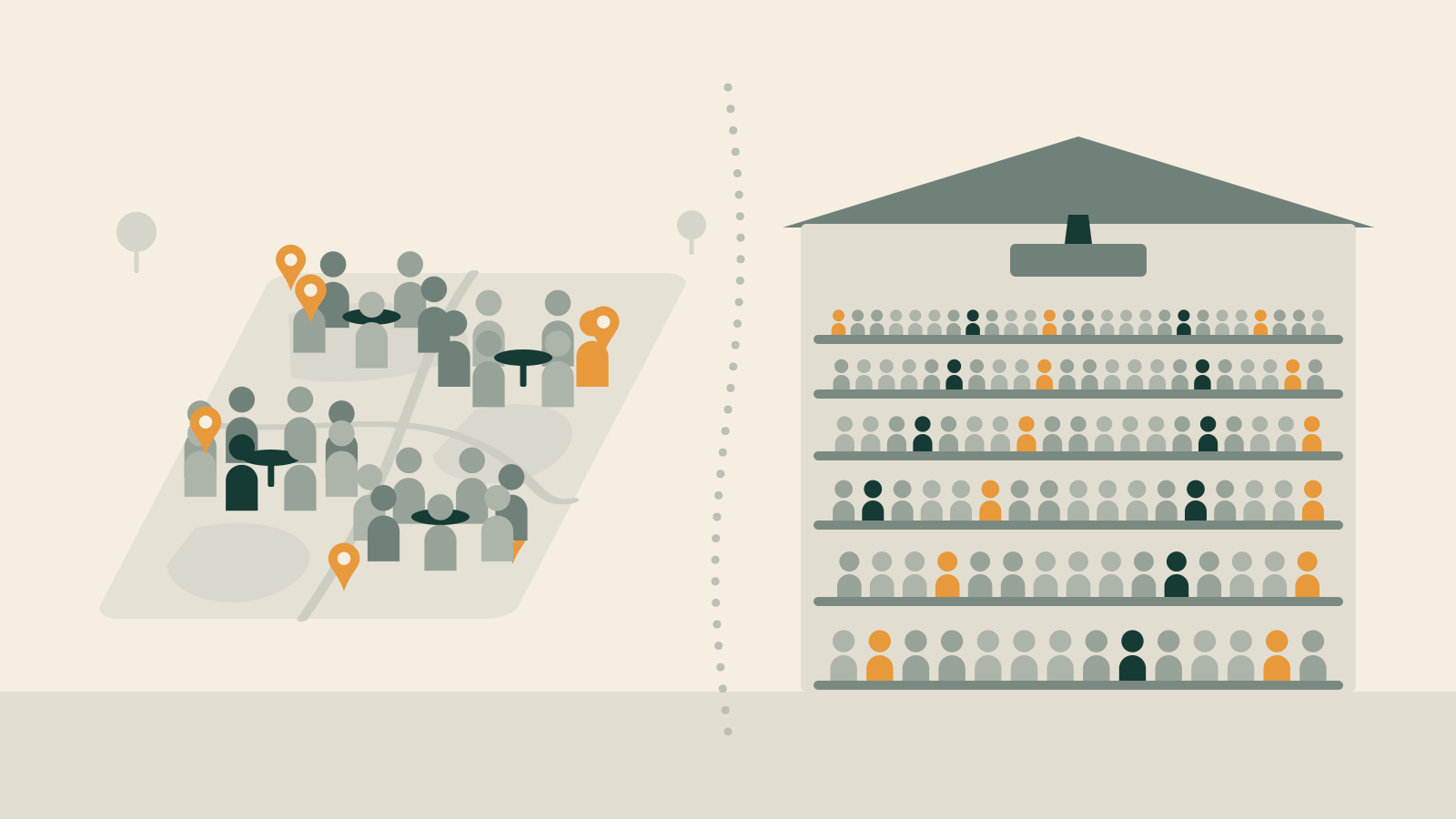
Antler starts before the company exists. You can arrive alone, with no idea, and spend the residency in a room of about a hundred people meeting potential cofounders, testing ideas and forming a team. Antler then decides which teams to back.
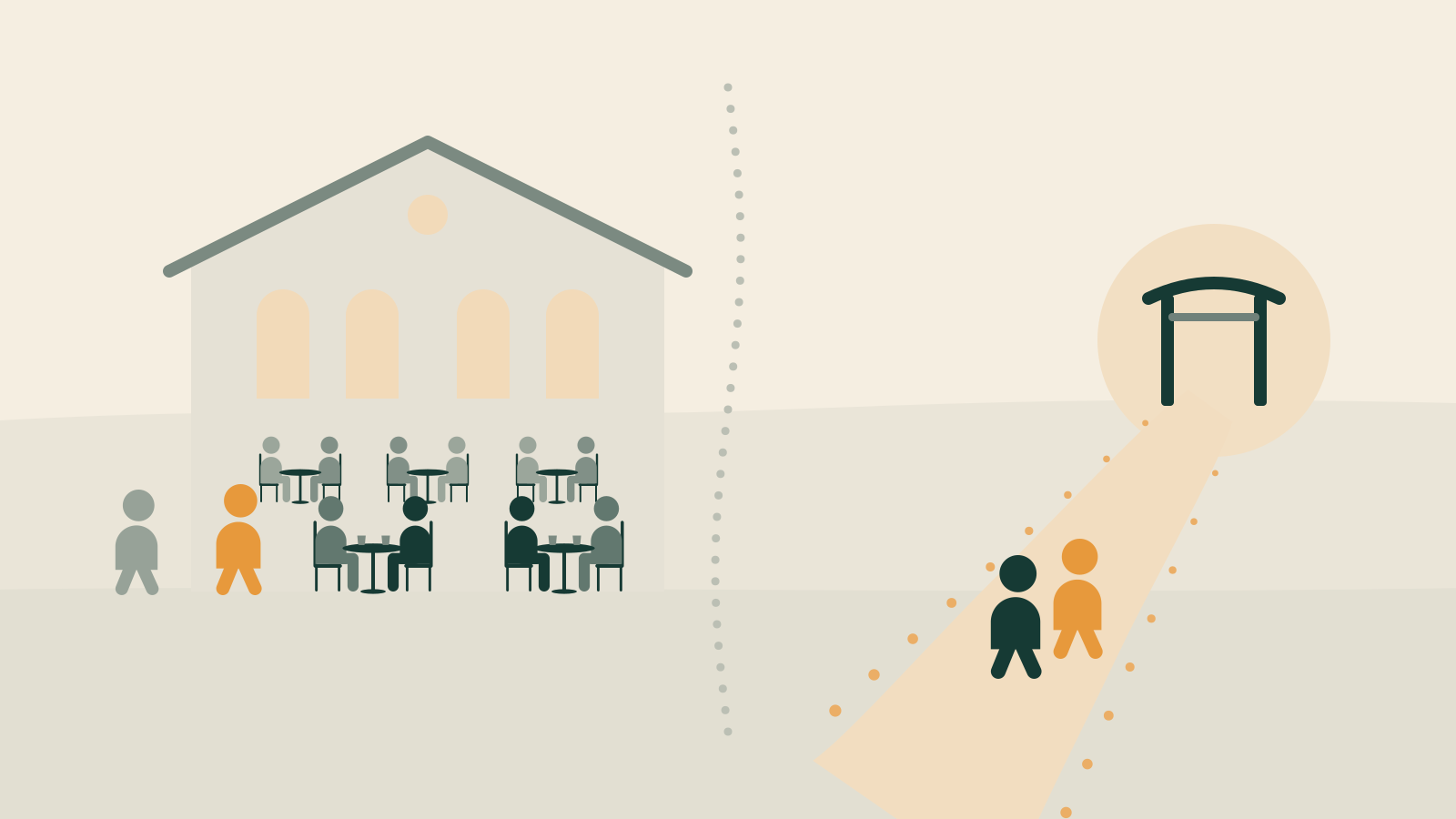
Techstars starts with a company and a team. You apply as a startup, and the first things it judges, in its own words, are "team, team, team". If you get in, you spend three months with a handful of other companies, a large group of mentors and a managing director, ending at Demo Day.
So the first question settles most cases: do you have a cofounder? If you don't, Antler is built for you, and Techstars will want to know who else is on your team. If you do, Techstars is designed for a team like yours, while Antler would give you the same residency in London (up to six weeks), a shorter one in Europe, and the same final decision.
Do you and your cofounder want investors at all?
Antler backs some of the teams that form in its residencies, and Techstars invests in the companies it accepts and ends with Demo Day. Both are routes into venture capital. If you're joining Antler alone, decide what kind of company you and a cofounder want before you join a programme built to produce venture-backed companies. If you already have a team for Techstars, decide it together now.
Basecamp's David Heinemeier Hansson, whose company started as a side business, put the choice as odds. On paper, he wrote, a 30% chance of making $3 million is worth the same as a 3% chance of making $30 million, but you have to pick one, and the two need different strategies. Venture money is built for the long shot.
Disagreements about growth are a real cost. Buffer raised $3.5 million in 2014. After it cut costs to become profitable, its leadership split over growth targets, cofounder Leo Widrich left, and the lead investor raised a clause letting investors claim a 9% annual return. Buffer spent $3.3 million, about half its cash, buying investors out. Jason Lemkin of SaaStr adds that the most common trigger for a board replacing a CEO is an unplanned request for more money.
Read bootstrap vs venture capital before either application.
What Antler is
Antler calls itself a day zero investor. Its FAQ says "We are not an accelerator or incubator", and its About page says it backs founders "even before they have a team or idea", from offices in 27 cities.
The residency is what founders join, and each country runs its own version. London now runs all year with "no fixed start dates", and founding teams and solo founders join for up to six weeks. In Berlin, solo founders join a cofounder matching track of about ten weeks. In the US, Antler invites a new group each month to work in person for up to three months in New York, San Francisco or Austin. Singapore's six-week residency is for teams that already have an idea. Our Entrepreneur First vs Antler page covers the countries in detail.
What Techstars is
Techstars says its accelerators give early-stage startups "three months of intensive, mentorship-driven support". On 14 November 2026 its accelerators page listed 16 programmes:
- City programmes: Boston, Boulder, Chicago, Columbus (with Ohio State), London, New York City and Tokyo.
- Industry programmes: finance with ABN AMRO, healthcare with Northwestern Medicine and with Permanente Medicine, food with Ecolab, AI in health in Baltimore, energy in Alabama, and space.
- Others: a programme with USC, and Techstars Anywhere, which is remote-first.
Each programme has its own managing director and cohort. Techstars also runs Founder Catalyst, a part-time, 10-week programme for earlier founders, and Startup Weekend, "a three-day event for aspiring founders to pitch their ideas, assemble a team, and bring a company to life." We look at whether that weekend is worth your time in is Startup Weekend worth it.
How Antler works, step by step
Taking the Continental Europe residency, which runs from Berlin with a base in Amsterdam:
1. Apply at any time. Antler takes applications all year for cohorts starting in March and September. 2. Interviews. The interviews are about you rather than an idea. One London participant described three rounds. 3. Join the cohort. About 100 founders, chosen from around 10,000 applicants, work in person at Antler's office. Solo founders and incomplete teams join the roughly ten-week matching track; complete teams join for about six weeks. 4. Form a team. Some people arrive with a team, others "start from scratch and find a co-founder during the residency", the page says. Participant accounts from London describe a two-week bootcamp, then teams of two or three working with a coach. 5. The decision. Antler decides which teams to back. Its page is open about the odds: "Not everyone makes it to investment. And that's by design."
How Techstars works, step by step
1. Choose your programmes. One application, a first and a second choice. Techstars says every application also enters a general pool that its managing directors can see. 2. Apply before the deadline. A first application takes "anywhere from one to four hours", and Techstars says its staff personally review every one. 3. Interviews. Invitations can come one to four weeks after the deadline. There are first and second round interviews, where Techstars asks about each founder's track record, how long the team has been together and how well it works together. 4. Screening committee. Teams that pass the interviews meet a virtual panel of the managing director, programme manager, mentors, partners, staff, alumni and experts. 5. Month one: Mentor Madness. Founders meet around 100 mentors, and some programmes pair each founder with three to five lead mentors. 6. Month two: execute. Work on milestones with the managing director, programme manager and lead mentors; in industry programmes, possibly a proof of concept with the corporate partner. 7. Month three: story, pitch and Demo Day. For the spring 2027 round in Boston, London, New York City and Anywhere, Demo Day is 3 June 2027.
Getting in: what each one looks for
Antler picks people
Antler's UK residency page lists four traits: drive, grit, a "spike" (being exceptional at something) and commitment. Its US page asks for "outlier achievers with edge, velocity, and deep domain strength." The UK page says many of its founders have ten or more years of experience.
Antler publishes selectivity by location: in the UK, "We back fewer than 1% of applicants"; in Continental Europe, about 2% of roughly 10,000 applicants are invited; in Singapore, "Fewer than 3% make it in." The UK page also says "Only <1% of applicants are invited to join the residency". Invited and backed are different steps, so the figures aren't directly comparable.
Techstars picks teams
Techstars gives its order plainly: "team, team, team, market, progress, idea". It advises applicants to round out the team with business, technical and other skills, and to show progress on the product and early traction. In interviews it asks how long you've worked together.
On stage, its own pages pull two ways. One help article says "Nothing is too early" and that it has accepted companies with only a concept. Another describes the accelerator as "designed for startups that are ready to scale and fundraise", and points earlier founders to Founder Catalyst.
Techstars doesn't publish an acceptance rate. A May 2026 post on its blog says "Thousands of founders apply to Techstars every year."
What that means for you
At Antler, the question is whether you, as a person, stand out. At Techstars, it's whether your team, and its history together, stands out. A pair who met three weeks ago has an answer to Antler's question and a weak answer to Techstars'.
Time, place and commitment
How long, and how many people
| Antler | Techstars | |
|---|---|---|
| Length | UK up to 6 weeks (solo founders and teams); Continental Europe about 10 (solo) or 6 (teams); US up to 3 months; Singapore 6 | 90 days |
| After the programme | UK: if it invests, Antler says it keeps working alongside you "while you build and raise" | Demo Day, then the alumni and mentor network |
| Cohort | About 100 founders in Continental Europe; no number on the UK page | 5 to 8 companies per programme in spring 2026 |
The size difference changes the experience. An Antler cohort is a large room of individuals sorting themselves into teams. A Techstars class is a small group of companies sharing the same mentors and staff; Techstars' spring 2026 announcement lists 6 startups in London, 7 in Techstars Anywhere and 8 in Chicago.
Where you have to be
Antler: in person at its office. London founders usually spend four to six days a week there. Amsterdam-based teams typically join Berlin in person for two weeks, then work from the Amsterdam base.
Techstars: it depends on the programme. Its help centre calls the accelerator a "Full-time, 12-week, in-person program", but New York City is hybrid, with the first two weeks in person, one in-person week in the middle and an in-person Demo Day. Techstars Anywhere is remote-first with three in-person offsites, for companies in North American time zones.
How much of your time
Both are full-time. Antler's UK page says "No freelancing. No safety nets", and in the US at least one founder must be full-time in residency. Techstars expects senior management "to be present and engaged for the majority of the 90-day program", and its New York City page asks accepted founders to "dedicate full exclusivity" to the startup, with no other work or study. One of its managing directors described the load as "18 to 24 months' worth of work in three months."
Visas
Antler's UK residency needs the right to work in the UK, or a visa application under way, by your first interview. Its US page says Antler doesn't sponsor visas and at least one cofounder must already have US work authorisation. Techstars says you must be lawfully in the programme's country for the whole programme, and that it can help with immigration only after you're accepted.
Dates for 2027
| Programme | Starts | Applications |
|---|---|---|
| Antler Australia | 8 February 2027 | Deadline not on the start dates page |
| Antler Nigeria (Lagos) | 1 March 2027 | Deadline not on the start dates page |
| Antler Korea | 15 March 2027 | Deadline not on the start dates page |
| Antler Kenya (Nairobi) | 22 March 2027 | Deadline not on the start dates page |
| Antler UK, US, Canada, Nordics | Rolling | Reviewed year-round |
| Antler Continental Europe | March and September | Open all year |
| Techstars Boston, London, New York City, Anywhere | 8 March 2027 (Demo Day 3 June 2027) | Final deadline 18 November 2026 |
Antler's UK page now says "There are no fixed start dates": London runs all year and you start when you're ready. Techstars' industry programmes set their own dates.
Solo founders and cofounders
This is the difference most people are really asking about.
At Antler, you can come alone. The UK FAQ says "We back exceptional solo founders with a solid idea or a product already in market", and that it will put possible cofounders in front of you, "but we can't promise a match." In Europe, a complete team gets a shorter residency, about six weeks; in London, everyone joins for up to six.
At Techstars, a solo founder can get in, but the team still decides it. Its help centre says: "Absolutely you can get accepted into Techstars as a solo-founder." It adds that you'll need to show how others on your team will help deliver results. Andres Barreto, managing director of Techstars New York City, said in May 2026 that Techstars would rather have a solo founder than cofounders who visibly don't get along. Matthew Jaeh, who runs the Alabama EnergyTech programme, said "there is usually at least one company that has a co-founder breakup" in each programme.
Neither one finds you a cofounder in the usual sense. Antler gives you a room and a deadline. Techstars doesn't help with it inside the accelerator; the closest it comes is Startup Weekend, a single weekend with whoever turns up.
What happens if you don't have a team
At Antler, the UK page now backs exceptional solo founders but says it "can't promise a match"; those it doesn't back stay part of its community and can reapply. In the accounts we read, people without a team didn't get investment. Founders who went describe the practical side: in one London cohort in 2023, under the older fixed-cohort format, team formation closed at week 8, after which solo participants could only join an existing team as a third member. We collect those accounts in is Antler worth it?
At Techstars, the question comes earlier. You can apply alone, and Techstars will look at who else helps you deliver. Or you can find a cofounder, work together for a while, and apply when "how long have you worked together?" has a real answer.
Community after the programme
Antler says founders it doesn't back stay in its community for life, with events, perks and the chance to reapply or join a portfolio company. Its FAQ describes a community of 8,000+ founders and 600 advisors, which is its own figure.
Techstars says that when a mentor is a strong match, they often keep working with the company after the programme. Because each programme is local or industry-specific, much of that network sits in the city or industry you joined. One founder below found the support after the programme thinner than expected.
What founders who went through it say
These are individual accounts, each from one cohort in one year. We lead with what went wrong, then what went well.
Read these accounts with a grain of salt. People rarely criticise a programme in public: they don't want to burn bridges with its staff, its investors or the founders they met there. So most first-hand posts lean positive, and a downside that appears even in a glowing account deserves more weight than the praise around it.
Antler
- The deadline. Jane Fisher (London, summer 2023) wrote that by week 8, anyone without a team "basically became invisible". Mihail Marian (London, about 2019) found a cofounder outside the cohort with two weeks left. Pavel Kucherbaev (Amsterdam, 2024) had no team seven weeks into an 11-week residency.
- Teaching. Kucherbaev wrote that there is "close to no educational component", and found coaches' feedback mixed. Fisher felt there was too much ideation and too little building.
- The outcome. Darryl Han's team (Vietnam, 2024) reached the top ten and pitched to the regional committee without getting a yes. Rehman's team (Malaysia, 2025) passed the mid-programme cut and gathered 10 letters of intent, then didn't get funding. Of the finished accounts we read, only one, from Singapore in 2023, ended with Antler investing.
- What they valued. The people, above all: Kucherbaev called the cohort's calibre the biggest value, and Fisher learned a lot from repeat founders. Han said months working in person deepened his partnership with his cofounder.
The full set of accounts, with sources, is in is Antler worth it?
Techstars
Four accounts are from Techstars Boulder between 2020 and 2024, and two from one company in Techstars Columbus in autumn 2025, so they say more about those programmes than about Techstars as a whole.
- Support ended with the programme. Julien Delange, who went through Techstars Boulder in 2021, wrote that help stopped the day the programme finished and that a request through Techstars' platform got no reply. He found the community channel's advice no better than an online forum, and said the "Give First" spirit was "long gone". He doesn't regret going, since it helped him raise his first round and meet a valuable advisor, but wouldn't do it again for a second company.
- The workload. Brooke Yoakam, in the Boulder fintech programme in 2022, told Boring Business Nerd she worked from 7am to midnight most nights during the in-person weeks: "I got no sleep, but it was definitely worth it." Juliana Amorim, writing on her company's blog about Boulder in spring 2024, found the first week of about 50 mentor meetings in 20-minute slots exhausting.
- More remote, more about fundraising. Drew Knight did Techstars in 2017 (the Target retail programme) and again in Columbus in 2025, and compared the two in November 2025. In 2025 most companies' teams stayed remote and only the CEOs took part, so the cohort felt like a CEO peer group with more focus on fundraising, revenue and pitch practice and less on product and team. Mentor Madness ran entirely on video calls: less tiring and better matched to his market, but he made weaker connections. Demo Day was virtual. His cofounder Austin Henley's diary of the same programme describes a cohort of eight companies and office days from morning to late night that he calls unsustainable, though helpful while launching.
- Investor help and fit. Val Yermakova, who did Techstars Boulder in 2020, wrote that Techstars' investor data "was not very helpful" for her raise, and that it leans toward companies with proven business models. Half her programme was remote because of the pandemic.
- What they valued. Mentors, in every account: Yermakova pitched to more than 80 and chose a handful to keep; Amorim's team picked three, one of whom kept working with them afterwards; Yoakam said the network stayed useful. Yermakova liked the small class (10 companies) and the weekly operations reviews. Amorim called the conversations with other founders the best part. Yoakam said the programme got her team to a rethought product in 13 weeks, where she had expected it to take a year. Knight found the content strong in both of his cohorts and called David Cohen's fundraising sessions his favourite part; Henley valued "peer madness", 30-minute chats with every other company, and the deadline that turned a side project into a launch.
Where the accounts agree
Antler participants value the people and question the process. Techstars participants value the mentors and the intensity, and one questions what's left once it ends. Nobody in either group describes the programme as easy.
Who each one fits
Antler fits you if:
- you don't have a cofounder and want to find one by working alongside people;
- you can go full-time and in person for six weeks to three months, without income;
- you have the right to work in the country where the residency runs;
- you have years of experience or a clear "spike", and want to start a venture-backed company from zero.
Techstars fits you if:
- you have a founding team, ideally one that has already worked together;
- you have a product or real progress, and want a small cohort and a lot of mentor time;
- you'd rather stay in your city or join a programme built around your industry;
- you can be ready for the next round (the spring 2027 round in Boston, London, New York City and Anywhere listed a final deadline of 18 November 2026; later rounds appear on the apply page).
Neither fits yet if you're employed, can't go full-time and don't have a cofounder. That's the most common position, and the next section is for it.

Foundinity: find your cofounder before you apply to either
Antler needs you to form a team inside its residency. Techstars judges the team you bring, and asks how long you've worked together. In both, the cofounder decides more than the programme does.
Foundinity is where you look for that person without quitting first. You state what you need in a cofounder, and answer an assessment about how you work: commitment, working style, ambition, personality, goals, values, alongside your skills and interests. A multi-trait algorithm built on established psychological compatibility models ranks the people you see, so you start with compatible people, not hundreds of random profiles. Skills tell you who can do the job. The rest tells you who you can actually build with for years.
Every match shows where the two of you align and where you differ, so the questions a selection panel will ask (who does what, how you decide, how committed each of you is) come up in your first call. A 10-day clock starts on each match, you have a limited number of messages before you book the intro call, and you book that call in the app. Set your status to exploring and only compatible members can see your profile. It's free to get started; Plus is $5 a week or $15 a month.
Once you've found someone, test it on a small trial project, then join Antler as a complete team for the shorter residency, or apply to Techstars with a team that has a history.
Which should you choose?
Choose Antler if you're alone, ready to go full-time in person now, can work where the residency runs, and want help forming a team. Check the page for your country: length, start date and solo rules differ.
Choose Techstars if you have a team and progress, want a small cohort and heavy mentor time, and one of its city or industry programmes fits where you are and what you build. Look at the specific programme, not the brand.
Choose neither yet if you don't have a cofounder and can't quit. Find one first, work on something small together, and apply as a team.
Weighing other programmes? Read Antler vs YC, Techstars vs Y Combinator and our list of the best startup accelerators for early-stage founders.
FAQ
Is Antler better than Techstars?
They do different jobs. Antler helps individuals form teams inside a full-time residency. Techstars accelerates a company that already has a team. The better one is the one that matches where you are now.
What is the main difference between Antler and Techstars?
Antler takes individuals, often before they have a team or an idea, and decides which teams to back at the end. Techstars takes companies and judges "team, team, team" first, then runs a three-month accelerator with a small cohort and many mentors.
Can a solo founder apply to Techstars?
Yes. Techstars' help centre says "Absolutely", but it still reviews your team, so show who else will help you deliver.
Can a solo founder join Antler?
Yes. Antler's UK page says it backs "exceptional solo founders with a solid idea or a product already in market", and will introduce possible cofounders, but "can't promise a match".
Does Techstars help you find a cofounder?
Not inside the accelerator. Its Startup Weekend events are three days where people pitch ideas and form teams.
Which is harder to get into, Antler or Techstars?
Antler publishes figures: under 1% invited and under 1% backed in the UK, about 2% invited in Continental Europe, under 3% in Singapore. Techstars doesn't publish a rate; it says thousands of founders apply each year.
Do Antler or Techstars charge a fee to join?
Antler's US and Singapore pages say there's no fee; its UK page lists "a £40k program fee" in its investment package without saying how it's charged. Techstars says there's no monetary cost to join its accelerators. People do ask about each one's investment terms; read those on their own sites.
How long are Antler and Techstars?
Antler's residency runs from up to six weeks (UK) and six weeks (Singapore) to three months (US). Techstars' accelerators run 90 days.
Where are Antler and Techstars?
Antler has offices in 27 cities, including London, Berlin, New York, San Francisco, Singapore and Sydney, and lists residencies in Lagos and Nairobi. Techstars runs city programmes in Boston, Boulder, Chicago, Columbus, London, New York City and Tokyo, plus industry programmes and remote-first Techstars Anywhere.
Is Techstars or Antler better for African startups?
Antler runs residencies in Lagos, from 1 March 2027, and Nairobi, from 22 March 2027. Techstars' accelerators page listed no programme in Africa when we checked on 14 November 2026.
Can I do Antler and then Techstars?
We found nothing on either programme's pages that rules it out. Both expect full-time work during the programme, and Techstars will ask how long your team has worked together.
Is Antler an accelerator like Techstars?
Antler says it isn't; it calls itself a day zero investor that runs residencies. Techstars calls its programmes accelerators.
Can I keep my job during Antler or Techstars?
You can apply to either while employed. If accepted, both expect full-time work: Antler says "No freelancing", and Techstars expects senior management present for most of the 90 days.
When is the next Techstars deadline?
For Boston, London, New York City and Techstars Anywhere, the spring 2027 round listed a final deadline of 18 November 2026, for programmes starting on 8 March 2027. Once that date has passed, the next round is listed on Techstars' apply page. Industry programmes set their own dates.
When does the next Antler residency start?
Australia from 8 February 2027, Nigeria from 1 March, Korea from 15 March and Kenya from 22 March, with rolling intake in the UK, US, Canada and the Nordics. Continental Europe starts in March and September.
Can I find a cofounder before applying to Antler or Techstars?
Yes, and both reward it. Complete teams get a shorter Antler residency, and Techstars judges the team first. Foundinity lets you look while you keep your job.
Sources
- Antler UK (antler.co/location/uk), checked 18 November 2026.
- Antler Continental Europe (antler.co/continental-europe), US (antler.co/location/us), Singapore (antler.co/location/singapore), cohort start dates (antler.co/cohort-start-dates) and About/FAQ (antler.co/faq), checked 14 November 2026.
- Techstars accelerators page (techstars.com/accelerators), programme pages for London, New York City and Anywhere (techstars.com/accelerators/london, /new-york-city, /anywhere), its "Techstars Investment Terms Update" page for the no-fee statement and Startup Weekend (techstars.com/communities/startup-weekend), checked 14 November 2026.
- Techstars help centre articles on selection, stage, full-time work, visas, solo founders and Accelerator vs Founder Catalyst (help.techstars.com, articles 4000207080, 4000207081, 4000207086, 4000207088, 4000207089, 4000219176), checked 14 November 2026.
- Techstars blog: "Inside a Techstars Accelerator: The Application & Interview Process" (12 January 2026), "Inside a Techstars Accelerator: What To Expect From the Three Months" (23 January 2026), "How to Make Your Techstars Application Stand Out" (12 May 2026), and newsroom post "Meet the Startups Joining Techstars' Spring 2026 Accelerator Programs" (9 March 2026), checked 14 November 2026.
- Julien Delange, "Building Codiga: Joining an Accelerator", 17 August 2023 (Techstars Boulder, 2021), checked 14 November 2026.
- Kieran Ryan, "Brooke Yoakam's Experience at Techstars Boulder", Boring Business Nerd, 20 July 2024 (Boulder fintech, 2022), checked 14 November 2026.
- Juliana Amorim, post on Croct's time at Techstars, Croct blog, 16 June 2024 (Boulder, spring 2024), checked 14 November 2026.
- Val Yermakova, "Y-Combinator vs Techstars: Inside Scoop from an Alum", Warmly, 8 February 2021 (Techstars Boulder, 2020), checked 14 November 2026.
- Drew Knight, "Comparing My Techstars Experiences", Substack, 23 November 2025 (Techstars Columbus, 2025; Techstars + Target, 2017), checked 14 November 2026.
- Austin Z. Henley, "My startup diary: Techstars", 12 October 2025 (Techstars Columbus, autumn 2025), checked 14 November 2026.
- Antler participant accounts (Fisher, Kucherbaev, Marian, Han, Ng, Rehman), listed with links on is Antler worth it?, checked 14 November 2026.
- David Heinemeier Hansson, "RECONSIDER", Signal v. Noise, 4 November 2015, checked 15 November 2026.
- Joel Gascoigne, "We spent $3.3M buying out investors: Why and how we did it", 10 September 2018, checked 15 November 2026.
- Jason Lemkin, "How to avoid being replaced as CEO by VCs", SaaStr, undated, checked 15 November 2026.
- Foundinity plans and how it works: foundinity.com, checked 14 November 2026.