Compare
YC vs a16z speedrun (2026): four large batches a year, or two smaller residencies?
Both are three-month programmes in San Francisco for very early teams, and both judge the team first. They differ in size, rhythm, history and how hands-on they are. Checked on their own pages on 14 November 2026, with what founders who went through each have written.

On this page
- Side by side
- "YC or a16z: who offers the better deal?"
- The short answer
- Before choosing either: do you want venture capital?
- What Y Combinator is
- What a16z speedrun is
- How Y Combinator works, step by step
- How a16z speedrun works, step by step
- Getting in: what each one looks for
- Focus: does your sector matter?
- Time, place and commitment
- Solo founders and cofounders
- Community after the programme
- Can you do both?
- What founders who went through it say
- Who each one fits
- Foundinity: find your cofounder before you apply to either
- Which should you choose?
- FAQ
- Sources
Side by side
| Y Combinator | a16z speedrun | Foundinity | |
|---|---|---|---|
| What it is | A three-month accelerator, run four times a year | A twelve-week residency run by Andreessen Horowitz, twice a year | A cofounder matching platform |
| Where | In person at YC's campus in San Francisco | In person at a16z's office in North Beach, San Francisco | Online, from wherever you live |
| Length | 3 months | 12 weeks, with office access for about 6 months | No end date; a 10-day clock on each match |
| Batch size | 199 companies in Winter 2026 (Extruct's count) | 70 to 80 in recent residencies; just over 80 in SR007 (speedrun's counts) | Not a batch |
| Started | 2005 | 2023, as a games accelerator | Not applicable |
| Focus | Any sector; 40% of each batch is "just an idea" on average (YC's figure) | "Almost every sector" today, after starting in games | Not applicable |
| Selectivity | No acceptance rate published | "Fewer than 0.4% of applicants are accepted" (speedrun's figure) | No application |
| Next start | Winter 2027, January to March; on-time deadline was 2 November 2026, late applications still read | SR008, 1 February to 18 April 2027; window closed 1 November 2026; SR009 late July 2027 | Any time |
| Solo founders | "We regularly accept solo founders" | "Absolutely" can apply; teams generally preferred | Everyone starts solo |
| Technical skills | The team should build the product itself | A team that can build, usually with a technical cofounder | Not required |
| Help finding a cofounder | Not in the batch; YC runs a separate, free matching platform | None; students still looking can try its alpha fellowship | Ranked by compatibility on multiple dimensions around who you are and how you work |
| Feedback if rejected | Only if you were interviewed | No individual feedback | Not applicable |
| After the programme | Year-round office hours, Bookface, alumni reunion | "You're a speedrun founder for life"; partner and network stay; desk access ends | Not applicable |
Every row is explained below with its source. We read both programmes' own pages on 14 November 2026.
"YC or a16z: who offers the better deal?"
Several of the top results for this search are built around that question, and most comparison pages lead with money: how much each invests and what it asks for in return. People compare the terms, and it's a fair thing to look at before you sign. We don't cover them here. They change, the pages that quote them go out of date, and they tell you nothing about whether you'd rather spend three months in a batch of 200 companies or a residency of 80, or whether either one will take your team.
If the terms matter to your decision, read them on each programme's own site on the day you apply. This page compares everything else.
The short answer
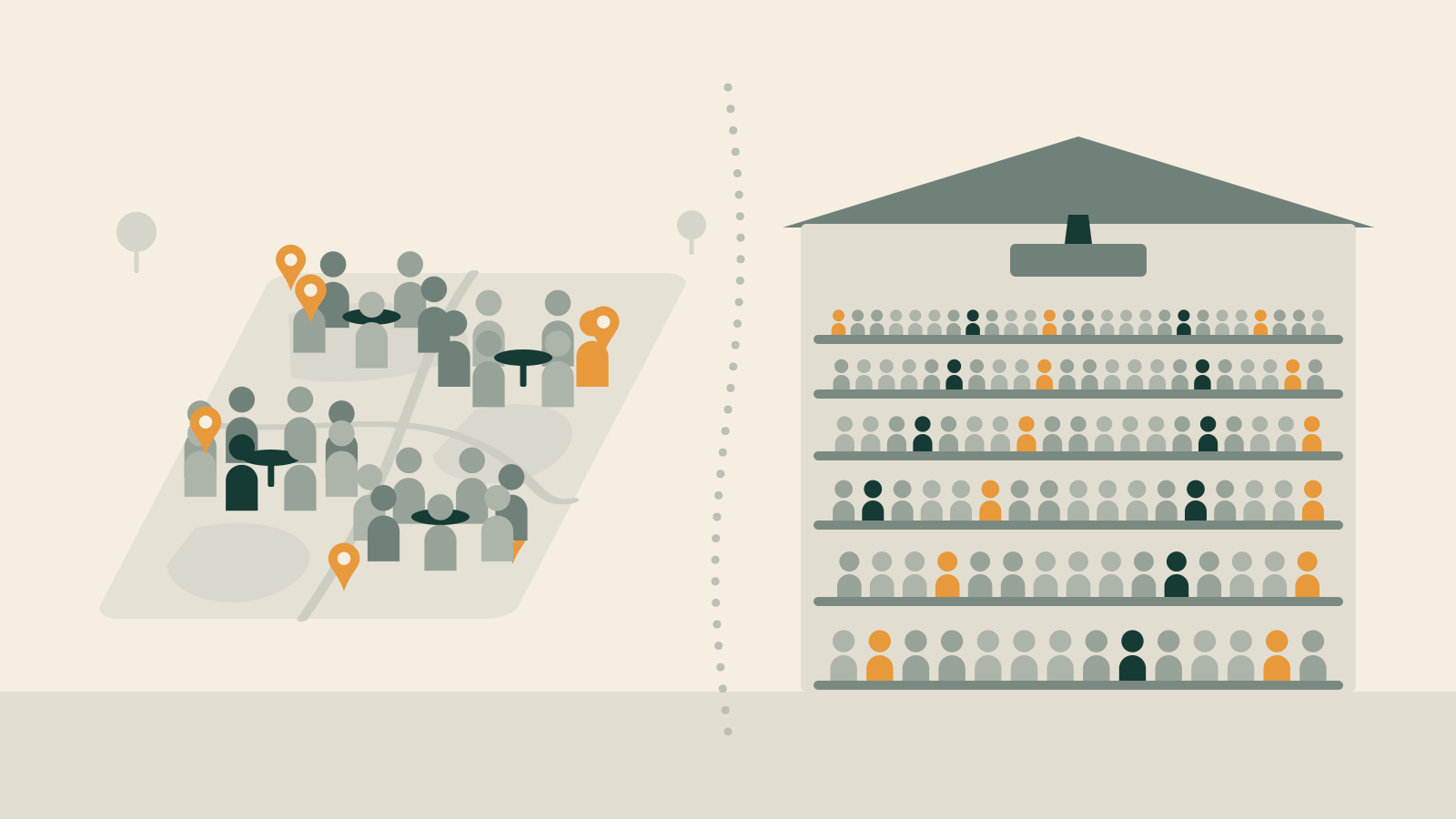
Y Combinator is the older, larger and more regular of the two. Four batches a year, about 200 companies in a recent one, a fixed rhythm of weekly partner meetings and group dinners, and an alumni network built over twenty years.
speedrun is younger, smaller and more hands-on by design. Two residencies a year, 70 to 80 companies each, an investing partner per company and a team of about 40 behind them. It started in games in 2023 and now takes almost any sector.
Both want founders who can build, both are in San Francisco, and both say a team is better than one person. If you don't have a cofounder yet, that's the first thing to solve, whichever one you aim for.
Before choosing either: do you want venture capital?
Both programmes are investors. YC invests in every company in a batch, speedrun is run by Andreessen Horowitz, and each ends with a Demo Day. Choosing between them assumes you've already decided to raise venture money, which is the bigger decision.
Venture investors set a high bar for a reason. In a survey of 889 venture capitalists by Paul Gompers and colleagues, the average return they required on a deal was 5.5 times the money invested. Martin Tobias, a pre-seed investor who argues for raising less (read it as one VC's view), spells out what that means for founders: a $200 million sale can change your life and barely register for a billion-dollar fund, and once you take money, the price investors paid starts making decisions for you.
A company that never raises can still end in a large sale, with its founders holding most of it. Wingify, started in Delhi in 2010, took no outside money; when the investment firm Everstone bought a majority stake for about $200 million in January 2025, TechCrunch reported, cofounder Paras Chopra owned 71% going in.
So agree with your cofounder on the goal first, a company you keep and grow on profit or a run at a large exit, and compare programmes after that. Start with bootstrap vs venture capital.
What Y Combinator is
Y Combinator runs one programme, four times a year: winter, spring, summer and fall, its About page says. Each batch lasts three months. The next is Winter 2027, from January to March, in person at YC's campus in San Francisco, starting with a three-day kick-off.
The About page says each batch is split into three groups led by YC partners, and each group into sections of 6 to 10 companies. Partners hold group office hours every two weeks and one-on-one office hours as often as founders want. The apply page describes "several small, autonomous groups of companies", a weekly dinner with your group and a dedicated general partner you meet weekly. The batch ends with Demo Day.
YC doesn't need you to have a product. Its FAQ says that on average, "40% of the companies we fund in each batch are just an idea." It does need a team that can build: "It's important for the founding team to have the skills to build their product themselves."
What a16z speedrun is
speedrun is Andreessen Horowitz's residency for very early founders: "An idea, a prototype, or an early product, with a team that's already building," its FAQ says. It runs twice a year, both times in San Francisco, for twelve weeks of firesides, practitioner sessions, office hours and events at a16z's North Beach office. Each company gets an investing partner, backed by a speedrun team of about 40 people.
It started in 2023 as a games accelerator in San Francisco and Los Angeles, Fortune reported, widened to tech and entertainment in March 2025, and is now what its general manager called a "horizontal program" in February 2026, according to TechCrunch. The FAQ lists AI, robotics, fintech, consumer, B2B and security among the sectors it backs.
We look at speedrun in more depth, including how hard it is to get in, in is a16z speedrun worth it.
How Y Combinator works, step by step
1. Apply with your company. You can apply while you're a student or employed. Students who want to finish their degree can use Early Decision to reserve a place in a later batch. 2. Interview, if invited. Most winter interviews happen by video in November and December. YC says decisions usually arrive by email within 24 hours of the interview, and on-time applicants hear by 11 December. 3. Feedback. If you're interviewed and not picked, YC explains why. If you aren't interviewed, it doesn't give feedback. 4. Go full-time in San Francisco. YC expects founders to work full-time on the company during the batch and afterwards. Its FAQ says the programme's scheduled activities take "a few hours per week" if you do all the recommended ones. 5. Three months, then Demo Day. Kick-off, weekly partner meetings and group dinners, office hours, then Demo Day in front of investors.
How a16z speedrun works, step by step
1. Apply at speedrun.a16z.com/apply. It's free. The application includes your team, your bios and a deck, and the FAQ says the team and bio sections get the closest read. 2. Rolling review. A person reads every application. Some applicants are asked for a short video pitch, a 15-minute interview, or both. TechCrunch reported that about 10% of applicants reach the live video interview. 3. Decision in about 4 to 6 weeks. If speedrun moves forward, it aims to close within about two weeks. 4. No feedback if it's a no. Each team is reviewed once per window; you can apply again for a later residency. 5. Twelve weeks in San Francisco. A founder retreat, Progress Day around week six, First Look Demo Day and Demo Day are required. Firesides, sessions and office hours fill the rest.
Getting in: what each one looks for
Y Combinator: a team that can build
YC doesn't publish an acceptance rate on its FAQ or apply page. What it does say:
- "In a typical YC batch, about half the companies applied multiple times before being accepted," and it encourages people turned down to apply again.
- The founding team should have the skills to build the product itself, which for most businesses means a technical cofounder.
- About 40% of each batch is just an idea, so progress helps but isn't required.
speedrun: the team, its history and its gaps
speedrun publishes its numbers: fewer than 0.4% of applicants accepted, more than 19,000 pitches for SR006 and more than 30,000 teams for SR007, which took just over 80 companies. These are its own counts.
What it looks for, from its FAQ, its January 2026 roundtable on applications and its general manager's comments to TechCrunch:
- The team and bios first. Complementary skills, with no "glaring holes", as Joshua Lu put it to TechCrunch.
- A team that can build. Usually a technical cofounder or equivalent skill. Non-technical founders are told to find a technical partner and apply together.
- Time building together. The FAQ says a short history "isn't a dealbreaker", and that what counts is what you've made as a team.
- Signs of demand, not necessarily revenue, and a clear, short pitch: 7 to 10 slides was the roundtable's suggestion.
Batch size changes how it feels
Extruct's analysis of YC's Winter 2026 batch counted 199 companies. speedrun's recent residencies had 70 to 80. Inside YC, sections of 6 to 10 companies and a weekly group dinner make the batch smaller day to day. Quang Hoang, who did YC in 2016 and again in 2025, told Business Insider that today's batch is about three times the size of his first one, but that day-to-day life doesn't feel very different because the subgroups stay similar.
Focus: does your sector matter?
YC has no sector focus. Extruct's breakdown of Winter 2026 put 28% of companies in AI-native services and 22% in AI-enhanced software, with developer infrastructure at 17%, so a large share of that batch was AI-related, but YC doesn't ask for it.
speedrun did have a focus, and it changed. Its first classes leaned heavily toward games. Older reviews reflect that: one 2024 founder told readers to apply "if you're working in games or a gaming adjacent space". In May 2026, Andrew Chen, a general partner on speedrun, wrote that the current batch included B2B, consumer, infrastructure, developer tools, healthcare, gaming, govtech and robotics, and that "We care about the founders more than the category."
Some comparison pages still describe speedrun as a games and entertainment programme, or YC as remote-friendly. Neither matches the programmes' own pages today.
Time, place and commitment
Where you have to be
Y Combinator: San Francisco, in person. The FAQ says "YC works much better in person", and after the three months, "you can go wherever you want."
speedrun: San Francisco, in person. The FAQ says "The twelve weeks happen in person at our San Francisco office", and you don't need to move your company permanently; some founders commute in for residency days. Another FAQ answer, for students and people with jobs, asks for "about one day a week in person". Andrew Chen's May 2026 post says both cofounders should be in San Francisco for the twelve weeks. Plan for in person and raise any constraint in the later stages, as the FAQ suggests.
Neither provides housing. speedrun connects founders from abroad with immigration counsel, banking and housing help through its Build in America programme; it said 30 of the 70 companies in one batch used its visa help. YC connects accepted founders with immigration attorneys.
How much of your time
Both expect full-time founders. YC expects full-time work during the batch and afterwards. speedrun says it has backed founders before they left their jobs and lets students and employees apply, but expects you to build full-time outside the residency days.
Dates for 2027
| Programme | Applications | Runs | Demo Day |
|---|---|---|---|
| Y Combinator Winter 2027 | On-time deadline 2 November 2026; late applications still read | January to March 2027 | Not dated on the apply page |
| Y Combinator later 2027 batches | Not listed yet; students can apply through Early Decision | Not listed | Not listed |
| speedrun SR008 | Closed 1 November 2026 | 1 February to 18 April 2027 | 13 April 2027 |
| speedrun SR009 | Applications sent now are considered for it | From late July 2027 | 5 October 2027 |
Check each programme's own apply page for the next windows once these pass.
Solo founders and cofounders
At Y Combinator, the FAQ says "We regularly accept solo founders," and in the same answer, that one-person startups are tough and you're more likely to succeed with a cofounder. Extruct counted 22 solo-founder companies in Winter 2026, about 11% of the batch, and 129 companies (64%) with exactly two founders. YC also runs a free cofounder matching platform, separate from the batch; it allows 20 invites a week. We compare it in YC cofounder matching vs Foundinity.
At speedrun, the FAQ answers "Absolutely. You can apply to speedrun as a solo founder," then adds that it "generally prefer[s] teams with multiple founders who bring complementary skills". Chen's May 2026 post says a cofounder isn't required but is treated as a signal. In the January 2026 roundtable, one partner said she looks for cofounders with "depth of relationship". speedrun has no cofounder matching. Its alpha fellowship takes students and recent graduates who write software, with or without a team, but doesn't promise to form one.
Read together: both programmes take solo founders, both would rather see a team, and both care whether that team can build. Only YC offers a separate place to look for someone, and choosing who to contact there is left to you.
Community after the programme
Y Combinator keeps founders close. Its About page says founders from every past batch can book office hours year-round, and alumni get Bookface (YC's internal platform), WhatsApp and Bookface groups by interest, an Alumni Demo Day and a yearly reunion.
speedrun says "You're a speedrun founder for life." Its FAQ says your investing partner, its customer marketplace, its talent network and the community stay with you, and only office access ends, six weeks after Demo Day. Its alumni network is far younger: the programme began in 2023.
Can you do both?
speedrun's FAQ says founders who have done YC or another accelerator can apply: "Yes, and we'd love to hear from you." We found nothing on YC's pages that rules out applying to both. The calendars don't overlap neatly: YC's Winter 2027 batch runs January to March, and speedrun's SR008 runs February to April.
What founders who went through it say
Most first-hand accounts of either programme are written by founders who got in, and some are published or collected by the programmes themselves. We couldn't read the Reddit threads that rank for these searches, so none are used. Each point below is one person's account unless we say several agree.
Read these accounts with a grain of salt. People rarely criticise a programme in public: they don't want to burn bridges with its staff, its investors or the founders they met there. So most first-hand posts lean positive, and a downside that appears even in a glowing account deserves more weight than the praise around it.
Y Combinator: the hard parts
- A one-track focus. Hahnbee Lee, cofounder of Mintlify (Winter 2022), wrote in October 2023 that the batch encouraged "a near one-track focus on achieving high-growth metrics", which was "not a healthy mindset to operate on 24/7" after Demo Day. Stepping back to think about strategy was something the founders had to work out themselves.
- The clock and the investors. DROdio, who did Winter 2017 and later YC's growth programme, wrote in 2020 that the "Demo Day clock" runs from day one, that founders then have to manage a lot of investor interest in a short window, and that his team never used office hours as well as it could have.
- More processed than it was. Quang Hoang told Business Insider in February 2026 that his 2016 batch felt more "family-style", with partners sometimes cooking dinner, and that the 2025 version felt more like a well-run process. He also described moving from France to an unfamiliar country for the first batch.
- Weekly metrics suit some companies better. Zac Townsend, from the Summer 2013 batch, wrote that slow enterprise sales made weekly progress updates hard, and called the batch stressful. That's an old account, but Lee's point about metrics a decade later is close to it.
Y Combinator: what they liked
- A change in how they think. Lee wrote that YC taught the team how to think about building a business, not only the product, and that partners helped with a pivot-or-persist decision.
- The other founders. Lee described batchmates with "a distinct optimism" and a lasting peer group. DROdio made close friends in the growth programme, a group of about 15 CEOs.
- Focus. DROdio said the batch "creates intense focus in a short period of time".
- Help, if you ask. Steli Efti, from Winter 2011, wrote that Paul Graham got his team a meeting with an investor and signed a visa recommendation letter once he followed up, and that founders who only follow the programme leave most of what they could learn "on the table". DROdio said the same: what you get "depends a lot more on you than YC".
- Worth doing twice. Asked if he was glad to have gone back in 2025, Hoang said: "It's 100% yes."
a16z speedrun: the hard parts
- A very high bar inside the cohort. Ioana Hreninciuc of Runware, from the first cohort, told speedrun's newsletter that the bar is "so much higher than you think".
- Less time to build. Artin Bogdanov, founder of SUN, said in a Product Hunt AMA that balancing the programme with building was tough, that he put the product first and compressed everything else, and not to expect much sleep.
- The pace. Paddy Lambros of Dex, one of the first UK companies in speedrun, wrote for Sifted in September 2025 that his team was shipping new features every 48 hours, the pace he said it takes to compete there.
- Underused help. Jonathan Pan, from the third cohort, wrote in 2024 that not all his fellow founders were making full use of the speedrun team. That matches what Efti and DROdio say about YC.
- Where to live. Vinay Chandrasekaran of Layerpath (SR004) chose a founder house with 16 other founders and said "I think some people might hate it." Housing isn't provided.
a16z speedrun: what they liked
- Attention per company. Bogdanov said he was surprised how involved the investors were and called detailed pitch feedback from Andrew Chen "priceless".
- The a16z name. Pan wrote that it helped his defence company with customers and made partner meetings much easier.
- A cohort at the same stage. Coco Chen of Dream Voyage (second cohort) told Fortune "the network is different", meaning other consumer builders. speedrun's own staff say founders value the cohort above almost everything else, and the newsletter says the SR007 kickoff was shortened partly in response to founder feedback.
Founders who compared the two
Bogdanov is the clearest: he described speedrun as "a more boutique, high-touch version of YC", with smaller cohorts and more attention per company. Hoang's view from inside YC is that its larger size matters less than it sounds, because the groups you work with day to day stay small. Brian Yun, CEO of Endo Health, wrote on LinkedIn in April 2026 that undergraduates often ask him about YC vs speedrun; he said he doesn't really know YC, and credited speedrun with his cofounder friendships, a later raise and his move to San Francisco. He is a speedrun scout, so his answer is an insider's. Each of these is one founder's view. Across the accounts for both programmes, the point that comes up most is the same: the value depends on how much you use it.
More speedrun accounts are in is a16z speedrun worth it.
Who each one fits
Y Combinator fits you if:
- you want a large peer group and a long-established alumni network;
- your founding team can build the product, even if it's only an idea today;
- you want four chances a year to apply, and are willing to apply more than once;
- you can work full-time in San Francisco for three months.
a16z speedrun fits you if:
- you want a smaller cohort and an investing partner who knows your company;
- you want help with customers and hiring alongside the programme;
- your team has built something together and can show signs of demand;
- you can be in San Francisco for the twelve weeks, or travel in for the residency days and build full-time otherwise.
Neither fits yet if you don't have a cofounder and would rather not apply alone. Both say a team is better. Only YC gives you a separate platform to look on, and neither batch finds you a cofounder.

Foundinity: find your cofounder before you apply to either
YC wants a team that can build. speedrun looks at what your team has built together, and its partners talk about depth of relationship and teams with no glaring holes. Both accept solo founders, and both say they'd rather not.
Foundinity is where you look for that person before an application window, while you keep your job. You state what you need in a cofounder, and answer an assessment about how you work: commitment, working style, ambition, personality, goals, values, alongside your skills and interests. A multi-trait algorithm built on established psychological compatibility models ranks the people you see, so you start with compatible people, not hundreds of random profiles. Skills tell you who can do the job. The rest tells you who you can actually build with for years.
Every match shows where the two of you align and where you differ, so the questions an interview panel will ask (who does what, how you decide, how long you're in it for) come up on your first call. A 10-day clock starts on each match, you have a limited number of messages before you book the intro call, and you book that call in the app. Set your status to exploring and only compatible members can see your profile. It's free to get started; Plus is $5 a week or $15 a month.
Then build something small together before the next window: our guides to questions to ask a potential cofounder and a cofounder trial project cover those weeks. speedrun's SR009 starts in late July 2027, which leaves time to do both.
Which should you choose?
Choose Y Combinator if you want the larger batch, the older network and four application windows a year, and your team can build the product.
Choose a16z speedrun if you want a smaller, hands-on residency with an investing partner per company, and your team has already built something together.
Apply to both if both fit: speedrun says YC founders are welcome, and the calendars are different.
Choose neither yet if you're still looking for a cofounder. Find one first, test it on a small project, and apply as a team.
Weighing other programmes? Read Techstars vs Y Combinator, Antler vs YC and our list of the best startup accelerators for early-stage founders.
FAQ
Is a16z speedrun better than YC?
Neither is better for everyone. speedrun is smaller and more hands-on, with two residencies a year. YC is larger, runs four batches a year and has a much older alumni network. Pick by size, timing and what your team needs.
What is the main difference between YC and a16z speedrun?
Size and rhythm. YC runs four three-month batches a year, with 199 companies in Winter 2026. speedrun runs two twelve-week residencies a year, with 70 to 80 companies each.
YC or a16z: who offers a better deal?
That's the question most pages lead with, and we don't compare money terms here. They change and say little about fit. Read each programme's current terms on its own site before you apply.
Which is harder to get into, YC or a16z speedrun?
speedrun publishes a rate: fewer than 0.4% of applicants accepted. YC doesn't publish one on its FAQ or apply page, so the two can't be compared on equal terms.
Is a16z speedrun prestigious?
It's very selective by its own numbers and backed by Andreessen Horowitz. It's also young, started in 2023, so its alumni network is much smaller than YC's.
Can I apply to both YC and a16z speedrun?
Yes. speedrun's FAQ welcomes founders who have done YC or another accelerator, and we found nothing on YC's pages that rules it out.
Can a solo founder get into YC or speedrun?
Both say yes. YC regularly accepts solo founders (about 11% of Winter 2026, by Extruct's count). speedrun says solo founders can apply but it generally prefers teams.
Do I need a technical cofounder for YC or speedrun?
Both want a team that can build its own product, which usually means a technical cofounder. speedrun tells non-technical founders to find a technical partner and apply together.
Does YC or speedrun help you find a cofounder?
Not inside the programme. YC runs a separate, free cofounder matching platform with 20 invites a week. speedrun has no matching; its alpha fellowship for students doesn't promise to form a team.
Are YC and speedrun both in person?
Yes, both in San Francisco. speedrun's FAQ says the twelve weeks are in person, though one answer asks students and employees for about one day a week in the office.
How long are YC and a16z speedrun?
Both run about three months: YC's batch is three months, speedrun's residency twelve weeks, with about six months of office access.
When are the next YC and speedrun batches?
YC Winter 2027 runs January to March 2027; late applications are still read. speedrun SR008 runs 1 February to 18 April 2027, and SR009 starts in late July 2027.
Is a16z speedrun only for gaming startups?
Not anymore. It started in games in 2023 and now backs founders in almost every sector, from AI and robotics to fintech, consumer, B2B and security.
Does YC or speedrun give feedback if you're rejected?
YC explains its decision if you were interviewed. speedrun doesn't give individual feedback and points applicants to its post on what it looks for.
Can I keep my job and apply?
You can apply to either while employed. If accepted, both expect full-time work on the company.
Which is better for first-time founders?
YC gives first-time founders a large peer group, a partner you meet weekly and office hours that continue for years. speedrun gives a smaller cohort and an investing partner backed by a team of about 40. Both expect a team that can build.
Sources
- Y Combinator apply page (ycombinator.com/apply), FAQ (ycombinator.com/faq), About page (ycombinator.com/about) and Early Decision page (ycombinator.com/early-decision), checked 14 November 2026.
- a16z speedrun homepage (speedrun.a16z.com), FAQ (speedrun.a16z.com/faq) and alpha fellowship page (speedrun.a16z.com/alpha), checked 14 November 2026.
- a16z, "Applications for a16z speedrun SR007 are now open" (a16z.com, 20 April 2026), checked 14 November 2026.
- speedrun newsletter (speedrun.substack.com): "What We Look for In Applications" (14 January 2026), "questions re: a16z speedrun" by Andrew Chen (14 May 2026), "That's a wrap on SR007 applications" (19 May 2026), "Scenes from SR007 Kickoff Week" (5 August 2026) and the alumni lessons post (23 April 2025), checked 14 November 2026.
- Extruct, "YC W26 batch analysis", 25 March 2026, checked 14 November 2026.
- Dominic-Madori Davis, "How to get into a16z's super-competitive Speedrun startup accelerator program", TechCrunch, February 2026, checked 14 November 2026.
- "Why a16z's 'speedrun' accelerator is playing a new game", Fortune, 2 April 2025, checked 14 November 2026.
- Henry Chandonnet, "I did Y Combinator in 2016 and 2025. The first time felt more 'family-style.'", Business Insider (via AOL), 22 February 2026, checked 14 November 2026.
- Hahnbee Lee, "YC was worth it, but not for the reasons you might think", Mintlify, 16 October 2023, checked 14 November 2026.
- DROdio, "Is Y Combinator worth it?", 28 September 2020, checked 14 November 2026.
- Steli Efti, "Is Y Combinator (Still) Worth it?", Close, 6 March 2017, updated 28 May 2026, checked 14 November 2026.
- Zac Townsend, "Going Through Y Combinator (S13): Nine Lessons Learned", checked 14 November 2026.
- Jonathan Pan, "a16z speedrun", The Nexus, 3 September 2024, checked 14 November 2026.
- Artin Bogdanov, "I'm founder of SUN (A16z Speedrun), Ask Me Anything", Product Hunt, checked 14 November 2026.
- Paddy Lambros, "What I've learned from the first 8 weeks on a16z's Speedrun programme", Sifted, 17 September 2025 (opening only; paywalled), checked 14 November 2026.
- Brian Yun, "a common topic I hear from undergrads these days is YC vs. a16z speedrun", LinkedIn, April 2026, checked 14 November 2026.
- Manish Singh, "Everstone acquires bootstrapped Indian startup Wingify for $200M", TechCrunch, 23 January 2025, checked 15 November 2026.
- Paul Gompers, Will Gornall, Steven Kaplan and Ilya Strebulaev, "How Do Venture Capitalists Make Decisions?", NBER conference paper, June 2016 (published in the Journal of Financial Economics, 2020), checked 15 November 2026.
- Martin Tobias, X article on raising less, 11 November 2026 (a pre-seed investor's view), checked 15 November 2026.
- Foundinity plans and how it works: foundinity.com, checked 14 November 2026.