Compare
YC cofounder matching vs Foundinity: which one fits your search?
Both are free to start. One hands you a queue of approved profiles and 20 invites a week. The other ranks people by how you work.

On this page
- Side by side
- What YC cofounder matching is
- What Foundinity is
- How each one works, step by step
- Getting in
- How you find people
- Reaching out, and how often it works
- What you know before the first call
- What YC's own numbers show
- After a match
- Privacy and safety
- How to get more out of YC's platform if you use it
- Cost
- Which one fits your situation
- Which should you use?
- FAQ
- Sources
Side by side
| Foundinity | YC cofounder matching | |
|---|---|---|
| Getting in | Sign up and take the assessment | Profile must be approved first; Startup School says this "may take up to a week" |
| How you find people | Ranked by compatibility on multiple dimensions around who you are and how you work | You look through approved profiles and decide who to invite |
| What it asks about you | What you need in a cofounder, plus an assessment of how you work | A profile you write yourself |
| Reaching out | Like the people you want to meet; a mutual like is a match | Up to 20 invites a week; an accepted invite is a match |
| Before the first call | A compatibility breakdown: where you align and where you differ | The profile |
| After a match | A 10-day clock; intro call booked in the app | You find a time over email |
| Who sees your profile | Only members who are compatible with you | Only approved members |
| Cost | Free to get started; Plus $5 a week or $15 a month | Free |
The sections below go through each row, then cover what YC's own numbers show, how to use either platform well, and which one fits your situation.
What YC cofounder matching is
Y Combinator launched its cofounder matching platform in mid-2021, as part of Startup School, its free online programme for founders. You don't need to be in a YC batch to use it. You write a profile, wait for approval, then browse other approved members and send invites. When someone accepts your invite, you're matched and can arrange a call.
YC published early numbers about three months after launch, in October 2021: 16,000 profiles, 130,000 invites sent and 33,000 matches. Those figures are useful below, because they show how invites and matches actually behave on the platform.
What Foundinity is
Foundinity is a cofounder matching platform that starts with fit. You state what you need in a cofounder, answer an assessment about how you work, and see people ranked by compatibility. Every match comes with a breakdown of where you align and where you differ, and a 10-day clock that keeps the conversation from stalling. There's no approval queue to wait in.
How each one works, step by step
On Foundinity
1. Sign up and say what you need in a cofounder. 2. Take the assessment. It covers commitment, working style, ambition, personality, goals and values, alongside your skills and interests. 3. Open the app to people ranked by compatibility. 4. Like the people you want to meet. A mutual like is a match. 5. Read the compatibility breakdown and book the intro call in the app before the 10-day clock runs out.
On YC cofounder matching
1. Write a profile: your background, what you want to build, what you're looking for in a cofounder. 2. Wait for approval, which Startup School says may take up to a week. 3. Browse approved profiles and pick who to invite. 4. Send invites, up to 20 a week, each with a personal message. 5. When someone accepts, you're matched by email and arrange a call yourself.
Getting in
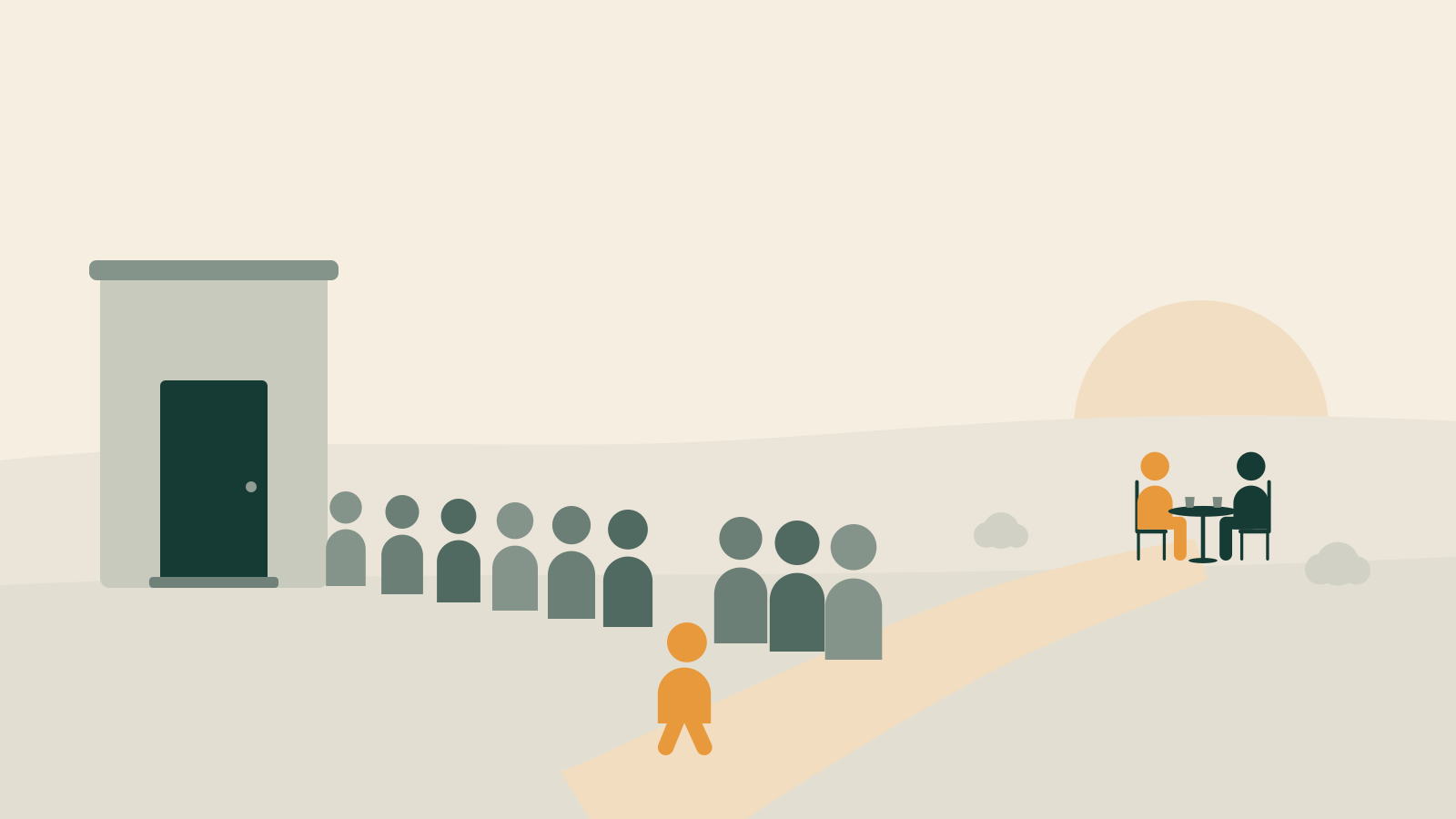
Foundinity has no queue. You sign up, say what you need in a cofounder and take the assessment, and the app shows you compatible people.
YC's platform asks you to wait. Every profile is reviewed before you can use it, and Startup School's FAQ says approval "may take up to a week". It can take longer: in August 2025, a Hacker News user posted that their profile had been in review for over a month. If your search has a deadline, such as a programme application, that week matters.
How you find people
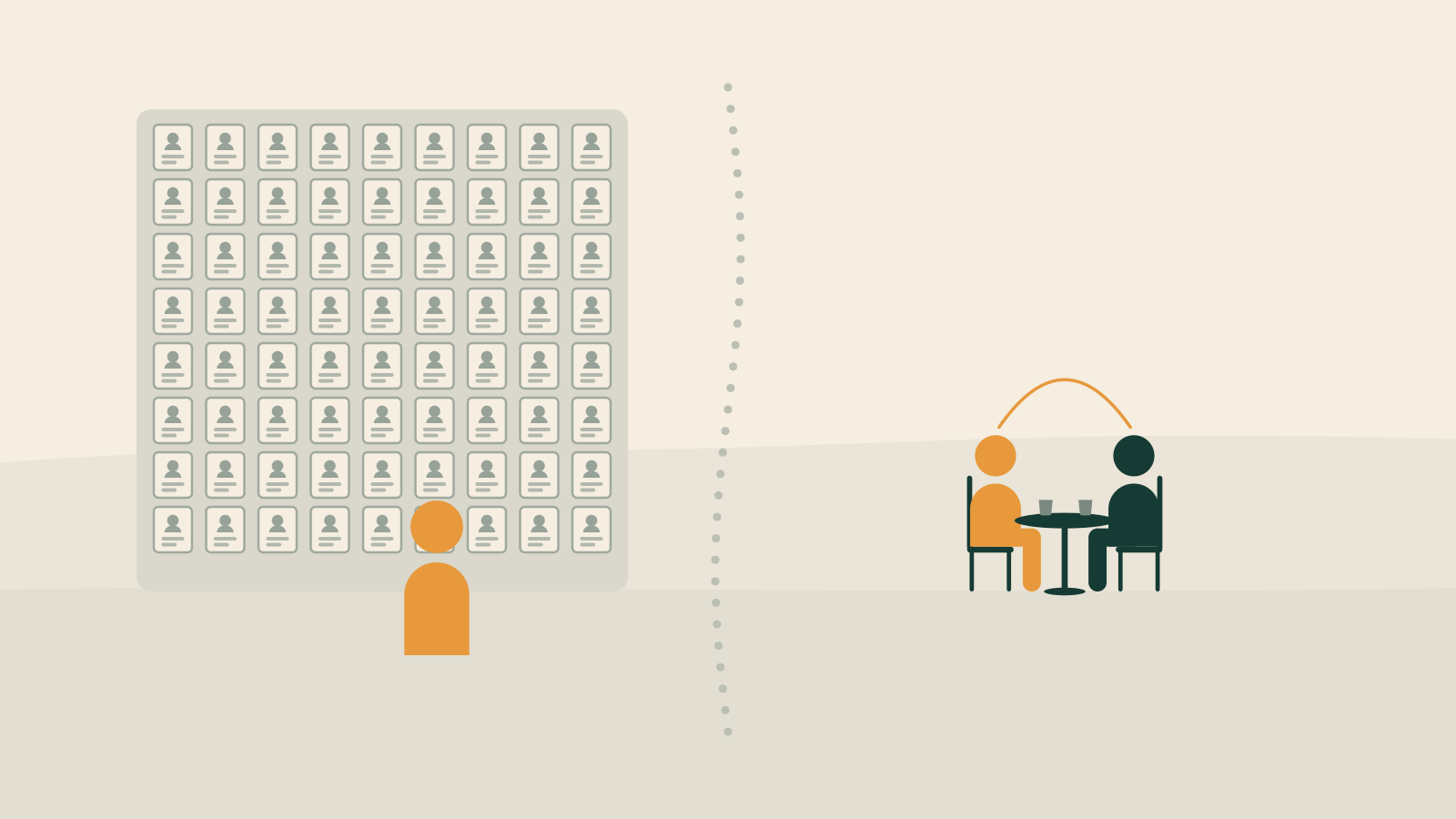
On YC's platform, you read. You go through approved profiles one at a time and invite the people who look promising. Commenters in a 2023 Ask HN thread called "YC co-founder matching is bad" described exactly that: clicking through profiles with no good way to search by skill or idea. A thread on r/startups sums up the mood in its title: "YC cofounder match sucks".
On Foundinity, you state what you need in a cofounder, and answer an assessment about how you work: commitment, working style, ambition, personality, goals, values, alongside your skills and interests. A multi-trait algorithm built on established psychological compatibility models ranks the people you see, so the first screen is already sorted by fit.
Reaching out, and how often it works
YC caps you at 20 invites a week, and most invites aren't accepted. YC's own numbers from the platform's first months, published in October 2021, counted 130,000 invites sent and 25% accepted. Three out of four went nowhere.
On Foundinity you like the people you want to meet. When the like is mutual, it's a match. Since the people you see are ranked by compatibility, your likes go to people who already fit what you asked for.
What you know before the first call
A YC profile tells you someone's background, what they want to build and what they're looking for. It can't tell you how they work under pressure or how much time they really have. You learn that on the call, and on the next one.
Every Foundinity match shows a compatibility breakdown: where the two of you align and where you differ. If you differ on commitment or ambition, you'll know before you meet, and you can ask about it first. Skills tell you who can do the job. The rest tells you who you can actually build with for years.
What YC's own numbers show
YC's October 2021 post is one of the few public data sets on how cofounder matching behaves. A few figures from it:
- 25% of invites were accepted. Three in four went nowhere, which is why the 20-a-week cap matters: most of your invites won't turn into conversations.
- 3.6 matches per person on average, after 130,000 invites across 16,000 profiles.
- Founders who weren't set on an idea averaged 5.1 matches, against 3.6 overall. Being open helps on any platform.
- 31% of founders did engineering, and 80% of the rest wanted a cofounder who did. If you're non-technical, expect competition for every engineer.
- Half of accepted matches came within 22 hours of the invite, and 75% within 4.5 days. If someone hasn't answered in a week, move on.
A month later, in November 2021, YC wrote that two pairs who met on the platform had joined its Summer 2021 batch. It hasn't published a match-to-company rate since.
After a match
On YC's platform, an accepted invite sends you both an email, and the rest is up to you. Startup School lists being unresponsive after matching among the reasons it can remove someone, and the person who started a 2022 Hacker News thread about the platform said their conversations usually stalled after one or two talks.
On Foundinity, a 10-day clock starts on every match, so it can't sit unanswered for weeks. You book the intro call inside the app instead of trading times over email.
Privacy and safety
Both keep your profile off the open internet. YC shows it to approved members. Foundinity shows it only to members who are compatible with you, and you can set your status to exploring while you're still employed.
On any platform, check who you're talking to. In September 2026, a Hacker News user described a YC match whose profile photo belonged to someone else; the match moved the chat to WhatsApp, refused calls and was reported to YC. Get on a video call early, wherever you met.
How to get more out of YC's platform if you use it
If you keep a YC profile alongside Foundinity, these habits help:
- Write the profile for the person you want. Say what you've built, what you'll own, and what you need from a cofounder, in plain terms.
- Spend invites on fit, not volume. With 20 a week and a 25% acceptance rate in YC's numbers, a short, specific message beats a template.
- Reply fast. Startup School can remove members who go quiet after matching, and most accepted matches in YC's data happened within a day.
- Try working together before deciding. Startup School recommends two to four weeks of close work before you commit to each other.
- Ask before moving to another app. Contacting members elsewhere without permission is against the rules.
For the questions worth asking on those calls, see our questions to ask a potential cofounder.
Cost
YC's cofounder matching is free. Foundinity is free to get started, with 5 likes a week, up to 3 active matches and up to 3 profile saves. Plus costs $5 a week or $15 a month (₹300 or ₹1,000 in India) and adds 15 likes a week, unlimited active matches, a list of everyone who liked you and up to 5 profile saves.
Which one fits your situation
You want to start this week. Foundinity has no approval queue. On YC's platform, the review alone may take up to a week.
You're non-technical and need an engineer. In YC's 2021 numbers, 80% of non-engineers wanted an engineering cofounder, and engineers were 31% of founders. On Foundinity, the engineers you see are ranked by compatibility on multiple dimensions around who you are and how you work, so you aren't competing on profile alone. Our guide on how to find a technical cofounder has more.
You keep losing conversations after one or two calls. The 10-day clock on every Foundinity match pushes it to a call or a clear no, and the breakdown gives that call something to talk about.
You're still employed. Both keep your profile off the open internet. On Foundinity you can also set your status to exploring and only compatible members see your profile.
You want to apply to YC later. You don't need YC's platform for that. Find someone you work well with, build together, and apply as a team.
Which should you use?
If the slow part of your search has been reading profiles and waiting on invites, use Foundinity. You skip the approval queue, start with people ranked by compatibility, and know where you align and differ before the first call.
If you also use YC's platform, ask before moving a conversation elsewhere: Startup School's FAQ lists contacting members on another platform without their permission as grounds for removal.
For more options, see YC cofounder matching alternatives, and for a paid directory, see CoFoundersLab vs Foundinity.
FAQ
Is YC cofounder matching worth it?
It costs nothing, so it can be worth a profile. Expect to wait for approval, read profiles one by one, and send invites that mostly aren't accepted: in YC's numbers from the platform's first months, 25% were.
How is Foundinity different from YC cofounder matching?
YC gives you a queue of approved profiles and 20 invites a week. Foundinity asks how you work, ranks people by compatibility, shows where you align and differ on every match, and puts a 10-day clock on each one.
Do I need to be in YC to use its cofounder matching?
No. Startup School's FAQ says it's for anyone who is seriously looking for a cofounder. Your profile still has to be approved first.
Is Foundinity free?
It's free to get started, with 5 likes a week and up to 3 active matches. Plus is $5 a week or $15 a month.
What is the success rate of YC cofounder matching?
YC hasn't published how many matches turn into companies. Its October 2021 numbers show 25% of invites accepted and 3.6 matches per person on average, and in November 2021 it said two pairs who met on the platform joined its Summer 2021 batch.
How long does YC cofounder matching approval take?
Startup School's FAQ says up to a week. One Hacker News user reported waiting more than a month in 2025.
Can you get rejected from YC cofounder matching?
Every profile is reviewed before you can use the platform, and Startup School can remove members later for things like hiring or selling to other members, going unresponsive after matching, or contacting people off the platform without permission.
Does using YC cofounder matching help you get into Y Combinator?
There's no public link between the two. You can use the platform without applying to YC, and applying doesn't require it.
Is Foundinity only for technical founders?
No. Foundinity is for anyone looking for a cofounder, technical or not. You say what you need, and the people you see are ranked by compatibility.
How long does it take to find a cofounder?
Usually months. The full answer covers what speeds it up.
How many invites can you send on YC cofounder matching?
20 a week.
Sources
- Y Combinator cofounder matching page (ycombinator.com/cofounder-matching) and Startup School FAQ (startupschool.org/faq), checked 8 November 2026.
- Y Combinator blog, "What do people want in a co-founder?", 21 October 2021 (ycombinator.com/blog/what-do-people-want-in-a-co-founder).
- Y Combinator blog, "Does co-founder matching work?", November 2021 (ycombinator.com/blog/does-co-founder-matching-work).
- Hacker News, "Ask HN: YC co-founder matching is bad", 21 February 2023 (news.ycombinator.com/item?id=34883106).
- Hacker News, "Ask HN: What is your experience with YC's co-founder matching?", 19 July 2022 (news.ycombinator.com/item?id=32155843).
- Hacker News, "Co-Founder Matching profile in review for over a month", 26 August 2025 (news.ycombinator.com/item?id=45030584).
- Hacker News, "Beware: Malicious Profiles on YC Co-Founder Matching", September 2026 (news.ycombinator.com/item?id=49552237).
- Reddit, r/startups "YC cofounder match sucks" (thread title).
- Foundinity plans and how it works: foundinity.com, checked 8 November 2026.