Compare
Entrepreneur First vs Foundinity: which route to a cofounder fits your life?
One is a selective, full-time program you apply to and move for. The other works around the job you have now. Here's how they compare, point by point.
On this page
- Side by side
- What Entrepreneurs First is
- What Foundinity is
- How each one works, step by step
- Getting in
- Full-time, and in a hub city
- How you meet people
- What you know before you commit
- What happens if you don't find a cofounder
- What the program is built to produce
- What participants say
- Using both: match first, then apply as a team
- Cost
- Which one fits your situation
- Which should you use?
- FAQ
- Sources
Side by side
| Foundinity | Entrepreneurs First | |
|---|---|---|
| Getting in | Sign up and take the assessment | Apply as an individual; rolling review, then meetings with its Talent Investing team |
| Who it looks for | Anyone looking for a cofounder, technical or not | People early in their careers with exceptional results; most have a technical background |
| Time | Fits around your current job | Full-time for the length of the program |
| Where | Online, from wherever you live | In person; you move to a hub city such as London, Bangalore or San Francisco |
| How you meet people | Ranked by compatibility on multiple dimensions around who you are and how you work | A cohort of individuals who pair up, test ideas and split if it doesn't work |
| Before you commit | A compatibility breakdown on every match: where you align and where you differ | What you learn from working together in the cohort |
| Pace | A 10-day clock on every match; intro call booked in the app | Fixed cohort dates; an Investment Committee decides which teams continue |
| Privacy while employed | Exploring status; profile visible only to compatible members | You leave your job to take part |
| Cost to you | Free to get started; Plus $5 a week or $15 a month | Your full time, plus a move if you don't live in a hub city |
The rest of this page goes through each row, then covers what participants have written about the program, how to combine the two, and which one fits your situation.
What Entrepreneurs First is
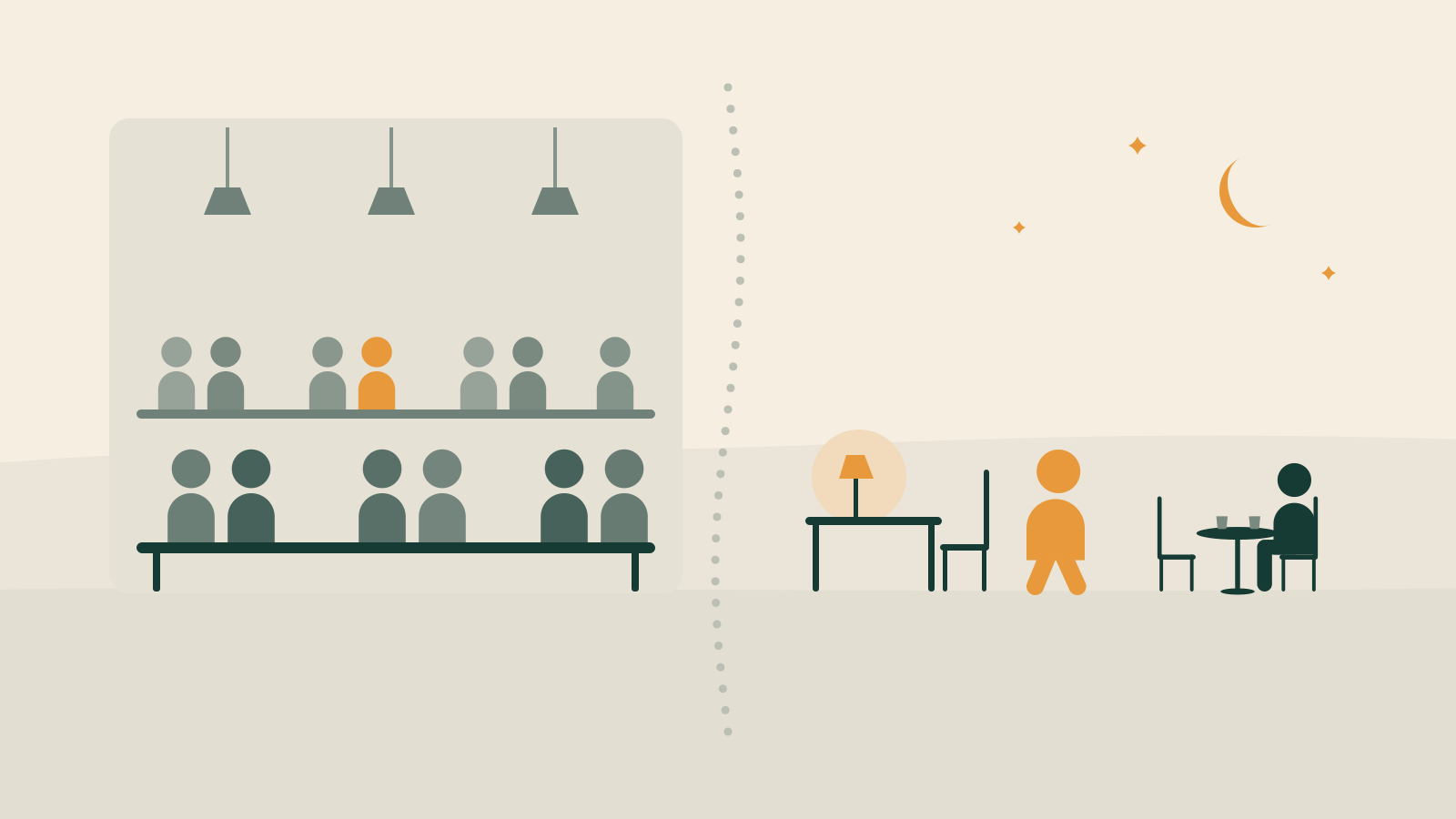
Entrepreneurs First, usually called EF (and often searched as "Entrepreneur First"), is a program that takes individuals before they have a cofounder or an idea, puts them in a cohort, and invests in the teams that form. Its FAQ says you need neither a cofounder nor an idea to apply, and that it assesses every applicant as an individual.
The program is full-time and in person. EF's FAQ says it expects you to "commit full-time to the program, and move to one of our hub cities to take part in person." In London and Bangalore, the first phase, called FORM, runs in the local office. Teams that EF's Investment Committee funds then move to San Francisco for the second phase, called LAUNCH. EF's homepage says the program is for people with "the ambition to build a company in the U.S."
What Foundinity is
Foundinity is a cofounder matching platform that starts with fit. You state what you need in a cofounder, take an assessment about how you work, and see people ranked by compatibility. Every match comes with a breakdown of where you align and where you differ, and a 10-day clock so the conversation actually happens. There's no application, no cohort date and no move. You can start tonight, from the job and the city you're in.
How each one works, step by step
On Foundinity
1. Sign up and say what you need in a cofounder. 2. Take the assessment. It covers commitment, working style, ambition, personality, goals and values, alongside your skills and interests. 3. Set your status to exploring if you're still employed. 4. Open the app to people ranked by compatibility, and like the people you want to meet. A mutual like is a match. 5. Read the compatibility breakdown and book the intro call in the app before the 10-day clock runs out.
On Entrepreneurs First
1. Pick one program in one city. EF asks you to apply to only one at a time: London or its Bridge Residency in San Francisco if you're in Europe, its funding and fellowships if you're in the US, Bangalore if you're in India. 2. Apply as an individual. EF reviews applications on a rolling basis and, if it thinks you might fit, invites you to meet its Talent Investing team. The US listing says it can't give individual feedback. 3. If you're accepted, arrange a visa if you need one, and move. EF doesn't provide visas, but its FAQ says it can often help with the application. 4. Join the cohort at a residential Kick Off Summit weekend, then work full-time in the office: meet other members, pair up, test ideas. 5. Pitch as a team to EF's Investment Committee. In London and Bangalore, funded teams then move to San Francisco for the final phase.
Getting in
EF is selective, and it says what it selects for. Its FAQ describes the people it wants as "outliers": people early in their careers who "can demonstrate that they've achieved exceptional outcomes relative to their peers." Its homepage adds that they have built products, organisations or startups before. On background, the FAQ says most people who join have a technical background, and that EF takes "a small number" of non-technical people who show solid technical understanding. People with seven or more years of experience are pointed to a separate program, XF2, in London.
Dylan Castillo, who joined EF's Berlin cohort in 2022, wrote that his process was an application form followed by interviews, and that other participants did between one and three.
Foundinity has no application. You sign up, say what you need in a cofounder and take the assessment. It doesn't ask you to prove you're an outlier first, and the people you meet are there for the same reason you are.
Full-time, and in a hub city
This is the biggest difference. EF's London and Bangalore FAQs both answer "Do I need to relocate?" with "Yes". The first 12 weeks run in the local office, and funded teams relocate to San Francisco for the final phase. EF's application hub lists start dates per program: London from April 2027, and Bangalore from February 2027, with applications by 1 December 2026 for that program's third selection round (checked 8 November 2026).
For most people that means leaving a job before they've met anyone they want to build with. Castillo wrote that in his cohort, most participants had recently quit their jobs or finished their studies before joining.
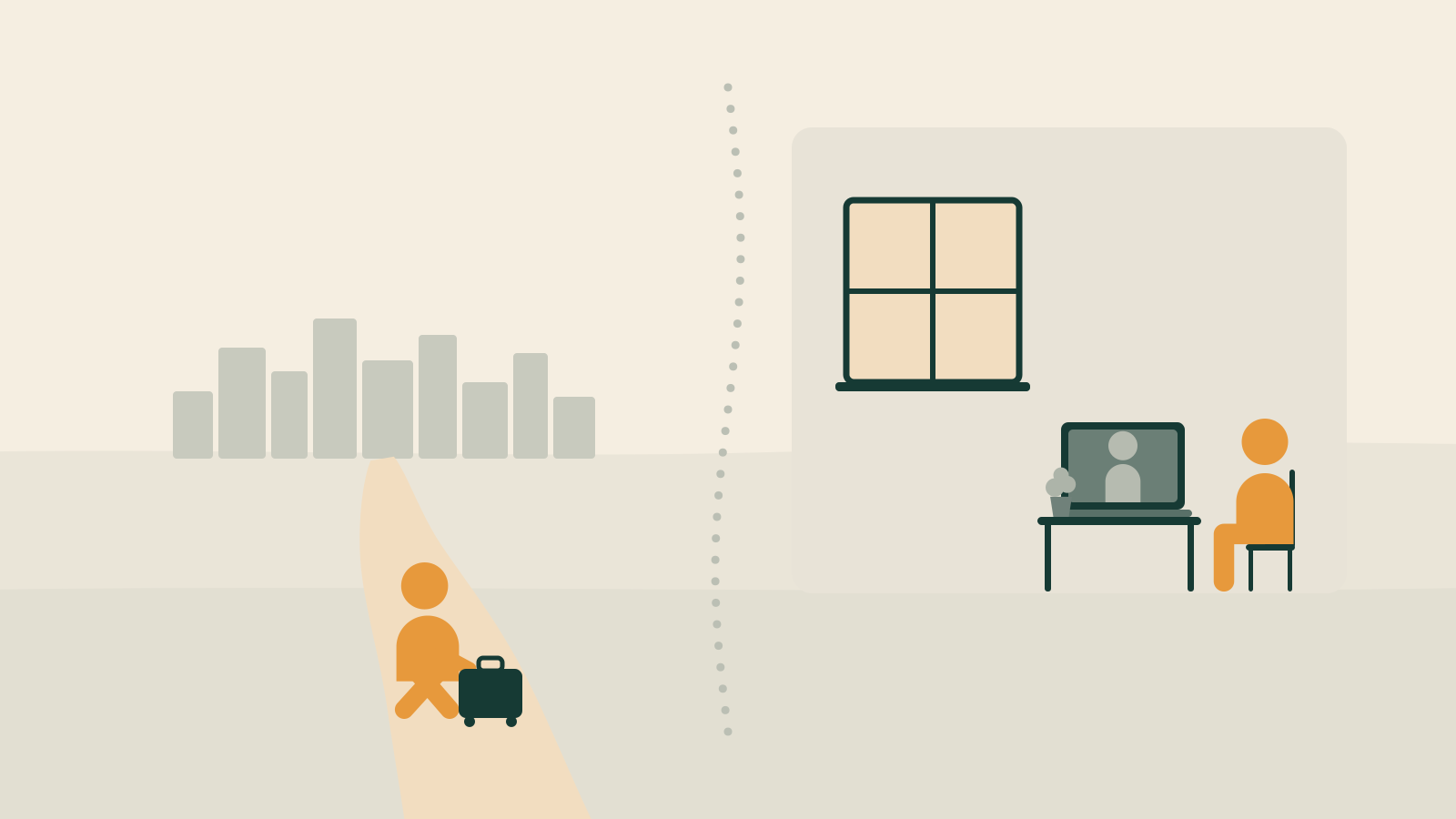
Foundinity fits around the life you have now. You can keep your job and set your status to exploring. Your profile is visible only to members who are compatible with you, so it isn't on the open internet for your employer to find. If the person you match with lives in another city, our guide to finding a remote cofounder covers how to make that work.
How you meet people
At EF, you meet the people in your cohort. Alexander Smirnov, who joined the London cohort in 2024, counted about 60. Castillo described ideation sessions as "a sort of speed-dating event for entrepreneurs": you talk through ideas, team up if there's a fit, and go back to the pool if it doesn't work. He tried three teams.
The process puts pressure on pairs. Dan MacDonald, who took part in EF's Toronto cohort in 2022, wrote that the program required one commercial and one technical cofounder per team, and that the pressure to find the right person and idea quickly often ended in a breakup and a fresh start. Smirnov described teams being scored from 1 to 4 in the second month on how likely they were to get through the Investment Committee.
On Foundinity, you state what you need in a cofounder, and answer an assessment about how you work: commitment, working style, ambition, personality, goals, values, alongside your skills and interests. A multi-trait algorithm built on established psychological compatibility models ranks the people you see. You aren't limited to one room of people who happened to start in the same month.
What you know before you commit
EF's answer is to work together. You pair with someone, test an idea for days or weeks, and find out how they handle it. That's a good test, and EF builds the program around it. The cost is that you test one person at a time, full-time, on a deadline.
Foundinity gives you a head start before the first call. Every match shows a compatibility breakdown: where the two of you align and where you differ. If you differ on commitment or ambition, you'll know before you meet and can ask about it first. Skills tell you who can do the job. The rest tells you who you can actually build with for years. Once a match looks right, a short trial project together is still the best next step, and you can do it in the evenings.
What happens if you don't find a cofounder
At EF, the search has a deadline. Castillo wrote that in his cohort, anyone not on a team after the first eight weeks had to leave the program. He counted 49 teams formed during the program and 13 that presented to the Investment Committee, and roughly half of participants weren't in a team when that phase ended. Smirnov wrote that you can bring in a cofounder from outside the cohort, who then goes through the same interviews; in his case, EF decided not to continue with them.
On Foundinity, the 10-day clock applies to each match, not to your search. If a match doesn't work out, you keep going with the next compatible person, and nobody asks you to leave.
What the program is built to produce
EF invests in the teams that form, so the program is shaped around companies it would back. MacDonald put it plainly: he knew EF "was not optimizing for my individual success as an entrepreneur", and said the push to find an idea that fit EF's criteria led him away from his own edge. EF's own homepage says it's for people who want to build a company in the US.
That suits some founders well. If you want to raise venture money for a US tech company and you're early in your career, it's built for you. If you want something else, such as a business you fund yourself or a company in your home market, you'll be working against the program's shape.
On Foundinity, you and your match decide what to build. Ambition and goals are part of the assessment, so if one of you wants to raise and the other wants to stay small, the breakdown shows the difference before your first call.
What participants say
Write-ups from people who went through EF are mixed, and most praise the people while questioning parts of the process:
- Dylan Castillo, Berlin, 2022. He liked the people, and the push to talk to customers. He disliked the meeting overhead, a sense that the program was "kind of a game", and being graded after check-ins. His team wasn't funded, and he said he would still do it again.
- Dan MacDonald, Toronto, 2022. He called EF possibly the best place to find a cofounder "if you want to start a venture-backed deep tech startup." He found advice on specifics inconsistent: one partner encouraged him to drop an idea and his cofounder, and another later said she'd thought he was onto something.
- Alexander Smirnov, London, 2024. He valued being surrounded by people his age doing the same thing. He found little hands-on founder experience among the staff, described the team-building phase as a "love island", and said EF went quiet before declining to continue with him and the cofounder he brought in.
These are personal accounts from single cohorts, and EF has changed its cities since: Berlin and Toronto aren't on its application hub today.
Using both: match first, then apply as a team
You don't have to choose once and for all. EF's FAQ says that if you already have a cofounder, you should mention it on your application and ask them to apply too. So one route is to find your cofounder on Foundinity while you're still employed, work on something small together, and apply to a program as a pair when you're both ready to go full-time.
That way you arrive with a person you've already tested, and you skip the part of the program Castillo and MacDonald found hardest: pairing up and splitting under time pressure. Our questions to ask a potential cofounder are a good start for those first calls.
Cost
Foundinity is free to get started, with 5 likes a week, up to 3 active matches and up to 3 profile saves. Plus costs $5 a week or $15 a month (₹300 or ₹1,000 in India) and adds 15 likes a week, unlimited active matches, a list of everyone who liked you and up to 5 profile saves.
EF's real cost to you is time and place: full-time for the program, a move to a hub city, and for most participants a job left behind.
Which one fits your situation
You're employed and can't quit yet. Foundinity. Set your status to exploring, meet compatible people in the evenings, and decide about quitting once you've found someone.
You can't move to London, Bangalore or San Francisco. Foundinity works from anywhere. EF's FAQ is clear that taking part means moving to a hub city.
You're non-technical. EF says most of its participants are technical and it takes a small number of non-technical people. Foundinity is open to anyone looking for a cofounder, and the developers you see are ranked by compatibility. Our guide on how to find a technical cofounder covers the rest of the search.
You've been in your career for years. EF's main programs look for people early in their careers, and it points people with seven or more years of experience to a separate program. Foundinity doesn't sort people by career stage.
You're early in your career, technical, free to move, and want to build a venture-backed company in the US. That is who EF is built for. Consider finding your cofounder first and applying as a team.
You keep losing conversations after one or two calls. The 10-day clock on every Foundinity match pushes it to a call or a clear no, and the breakdown gives that call an agenda.
Which should you use?
If you want a cofounder without first quitting, moving and being selected, use Foundinity. You start with people ranked by compatibility, know where you align and differ before the first call, and keep your job while you look.
If you're set on EF, Foundinity is still a sensible first step: find someone you work well with, test it on a small project, and apply together.
For a similar program, see Antler vs Foundinity. For Y Combinator's free platform, see YC cofounder matching vs Foundinity.
FAQ
Is Entrepreneur First worth it?
It depends on your situation. If you're early in your career, technical, free to move and want to build a venture-backed company in the US, participants say the people are the best part. If you have a job you can't leave, live outside its hub cities, or want to build a different kind of company, the full-time, in-person format is a high price before you've met anyone.
What do Entrepreneur First reviews say?
First-person accounts from 2022 to 2024 praise the cohort and the push to talk to customers. Common criticisms are pressure to pair up and split quickly, feedback that felt inconsistent, and the sense of being evaluated throughout. See "What participants say" above for the details and links.
How hard is it to get into Entrepreneur First?
EF doesn't publish an acceptance rate on its FAQ. It says it looks for people early in their careers who can show exceptional outcomes relative to their peers, and that most participants have a technical background.
Do I need a cofounder to apply to Entrepreneur First?
No. EF's FAQ says you don't need a cofounder or an idea, and that it assesses applicants as individuals. If you already have a cofounder, it asks you both to apply.
Do I need to be technical for Entrepreneur First?
Not always, but most participants are. EF's FAQ says it takes a small number of non-technical people who show solid technical understanding.
Do I have to relocate for Entrepreneur First?
Yes. Its FAQ says the program is full-time and in person in a hub city, and its London and Bangalore FAQs say teams that are funded move to San Francisco for the final phase.
Can I do Entrepreneur First part-time while working?
No. EF expects you to commit full-time. If you need to keep working, a platform like Foundinity lets you look for a cofounder alongside your job.
What happens if you don't find a cofounder at Entrepreneur First?
In Dylan Castillo's 2022 Berlin cohort, people not on a team after the first eight weeks had to leave the program. Alexander Smirnov wrote in 2024 that you can bring in an outside cofounder, who then goes through EF's interviews.
Entrepreneur First vs Antler: what's the difference?
Both are selective, full-time, in-person programs where individuals can form teams, and both invest in the teams that form. EF assesses people early in their careers and moves funded teams to San Francisco. Antler's UK residency lasts up to eight weeks in London, and Antler says many of its founders have ten or more years of experience. Our Antler vs Foundinity page has the details.
Entrepreneur First vs Y Combinator: what's the difference?
EF takes individuals and helps them form teams in a cohort. Y Combinator funds companies that apply, and its FAQ says it regularly accepts solo founders; for people without a cofounder, it points to its free cofounder matching platform. Both expect you in person.
How is Foundinity different from Entrepreneurs First?
EF is a program you apply to, move for and join full-time, where you pair up with people in your cohort. Foundinity is a matching platform you use from wherever you are: you take an assessment, see people ranked by compatibility, and get a compatibility breakdown and a 10-day clock on every match.
Can I find a cofounder on Foundinity and then apply to EF?
Yes. EF's FAQ asks applicants who already have a cofounder to say so and to apply together.
Is Foundinity free?
It's free to get started, with 5 likes a week and up to 3 active matches. Plus is $5 a week or $15 a month.
How long does it take to find a cofounder?
Usually months. The full answer covers what speeds it up.
Sources
- Entrepreneurs First homepage (joinef.com), FAQs (joinef.com/faqs, joinef.com/faqs/london, joinef.com/faqs/bangalore) and application hub (apply.joinef.com), checked 8 November 2026.
- Y Combinator FAQ (ycombinator.com/faq), checked 8 November 2026.
- Dylan Castillo, "My Experience at Entrepreneur First", 20 January 2023.
- Dan MacDonald, "Is Entrepreneur First Worth It? Part 4: My Brutally Honest Review of the Program", 8 May 2023.
- Alexander Smirnov, "Is Entrepreneur First worth the time?", 2024.
- Foundinity plans and how it works: foundinity.com, checked 8 November 2026.