Compare
Antler vs Foundinity: where should you look for a cofounder?
One is a full-time residency that says "if you're here to explore, don't apply". The other lets you explore while you keep your job. Here's how they compare.
On this page
- Side by side
- What Antler is
- What Foundinity is
- How each one works, step by step
- Getting in
- Full-time, in person, and not while you're employed
- How you meet people
- What you know before you commit
- Solo founders, and what happens without a team
- When the next residency starts
- What participants say
- Using both: match first, then apply as a team
- Cost
- Which one fits your situation
- Which should you use?
- FAQ
- Sources
Side by side
| Foundinity | Antler | |
|---|---|---|
| Getting in | Sign up and take the assessment | Apply and interview; in the UK, Antler says it backs fewer than 1% of applicants |
| Commitment | Fits around your current job | Full-time; the UK page says "If you're here to explore, don't apply" |
| Where | Online, from wherever you live | In person at an Antler office; in the UK, usually 4 to 6 days a week |
| How long | No end date; a 10-day clock on each match | UK residency up to 8 weeks for solo founders; about 10 weeks in Continental Europe |
| How you meet people | Ranked by compatibility on multiple dimensions around who you are and how you work | The people in your cohort, about 80 to 100 in the UK |
| Before you commit | A compatibility breakdown on every match: where you align and where you differ | What you learn from working together in the residency |
| Solo founders | Everyone starts solo; the point is to find your match | Welcome to join, but the UK page says "We don't invest in solo founders" |
| While employed | Exploring status; profile visible only to compatible members | "This isn't a side project. No freelancing." |
| Cost to you | Free to get started; Plus $5 a week or $15 a month | Your full time for the residency, plus the right to work where it runs |
The sections below go through each row, then cover what participants have written, how to use both, and which one fits your situation.
What Antler is
Antler describes itself as an inception-stage investor, and its FAQ says it is "not an accelerator or incubator". It runs residencies in cities across several continents. You apply as an individual or as a team, join a cohort at an Antler office, and work full-time on finding a cofounder, testing ideas and building. Antler invests in some of the teams that form.
The format varies by location. In the UK, solo founders and incomplete teams join for up to eight weeks from a set start date, and complete teams join for about six. In Continental Europe, the cofounder matching track runs about ten weeks from Berlin, with a base in Amsterdam. In the US, Antler invites a new group each month to work in person for up to three months in New York, San Francisco or Austin. Its Nordic offices take founders year-round.
What Foundinity is
Foundinity is a cofounder matching platform that starts with fit. You state what you need in a cofounder, take an assessment about how you work, and see people ranked by compatibility. Every match shows where you align and where you differ, and a 10-day clock keeps each conversation moving. There's no selection round, no start date and no office to move to.
How each one works, step by step
On Foundinity
1. Sign up and say what you need in a cofounder. 2. Take the assessment. It covers commitment, working style, ambition, personality, goals and values, alongside your skills and interests. 3. Set your status to exploring if you're still employed. 4. Open the app to people ranked by compatibility, and like the people you want to meet. A mutual like is a match. 5. Read the compatibility breakdown and book the intro call in the app before the 10-day clock runs out.
On Antler (UK residency)
1. Apply, then meet Antler's partners and show you can execute. Antler says fewer than 1% make it in. 2. Make sure you can work in the UK. Antler asks that you have the right to work, or be applying for a visa, by your first interview. If the visa isn't sorted by the end of week two, your offer moves to the next residency. 3. Join the residency in London and work there full-time, usually 4 to 6 days a week in person. 4. Meet the other residents, test how you work with potential cofounders, and form a team. 5. If you're invited to the Investment Committee and Antler invests, a build-and-raise phase of up to 12 weeks follows. If it doesn't, Antler says you stay part of its community and can reapply.
Getting in
Antler is open about how selective it is. Its UK page says it backs "fewer than 1% of applicants", and its Continental Europe page says it takes about 100 founders from a pool of around 10,000, with about 2% invited to the residency. It looks for founders it calls "outliers" and lists drive, grit, a "spike" (being exceptional at something) and commitment. It says many of its founders have ten or more years of experience.
Foundinity doesn't select you. You sign up, say what you need in a cofounder and take the assessment, and the app shows you compatible people. Being early in your career or mid-way through it makes no difference to whether you can start.
Full-time, in person, and not while you're employed
Antler is direct about this. Its UK page says the residency is a full-time commitment, with founders usually in person 4 to 6 days a week, and under commitment it says: "You're all in. This isn't a side project. No freelancing. No safety nets." The same page says: "If you're here to explore, don't apply."
There's a location requirement too. In the UK, you need the right to work, or a visa application under way, by your first interview. In the US, Antler says at least one founder needs work authorisation already and that it doesn't sponsor visas. In India, its residency is for teams able to join full-time in Bangalore.
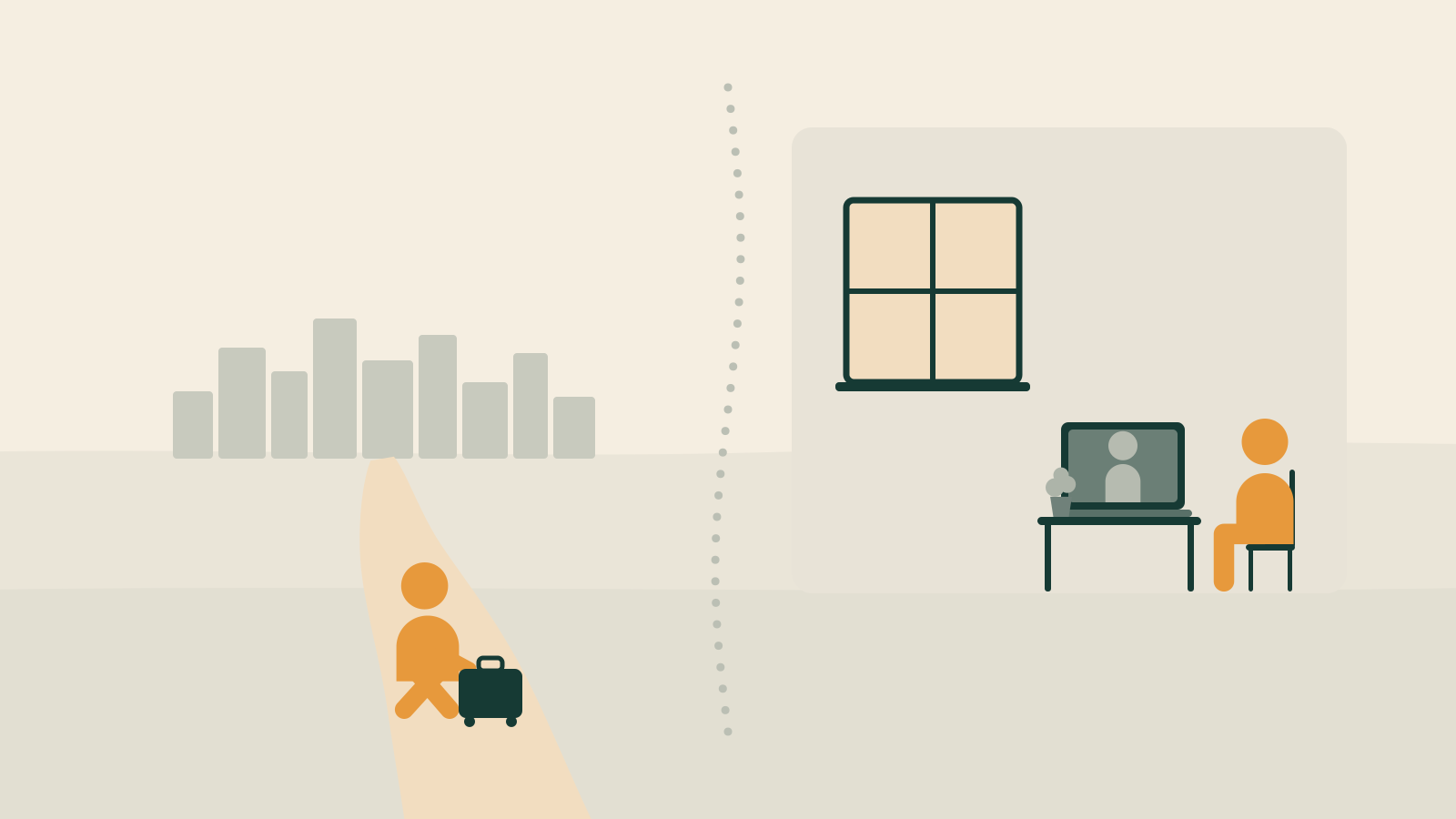
Exploring is what Foundinity is built for. You can keep your job, set your status to exploring, and meet people at your own pace. Your profile is visible only to members who are compatible with you, so your search stays out of public view. When you've found someone and tested how you work together, you can decide about quitting with a person already in place.
How you meet people
At Antler, you meet your cohort. The UK page describes a residency of 80 to 100 "outliers". Jane Peh, who joined Antler's fourth Singapore cohort in 2020, wrote that until you "track out", meaning form a team, you take part in bootcamps where you meet other individuals and test ideas. She also wrote that you're evaluated from day one: attendance, how you work with others, how your ideas land when you present.
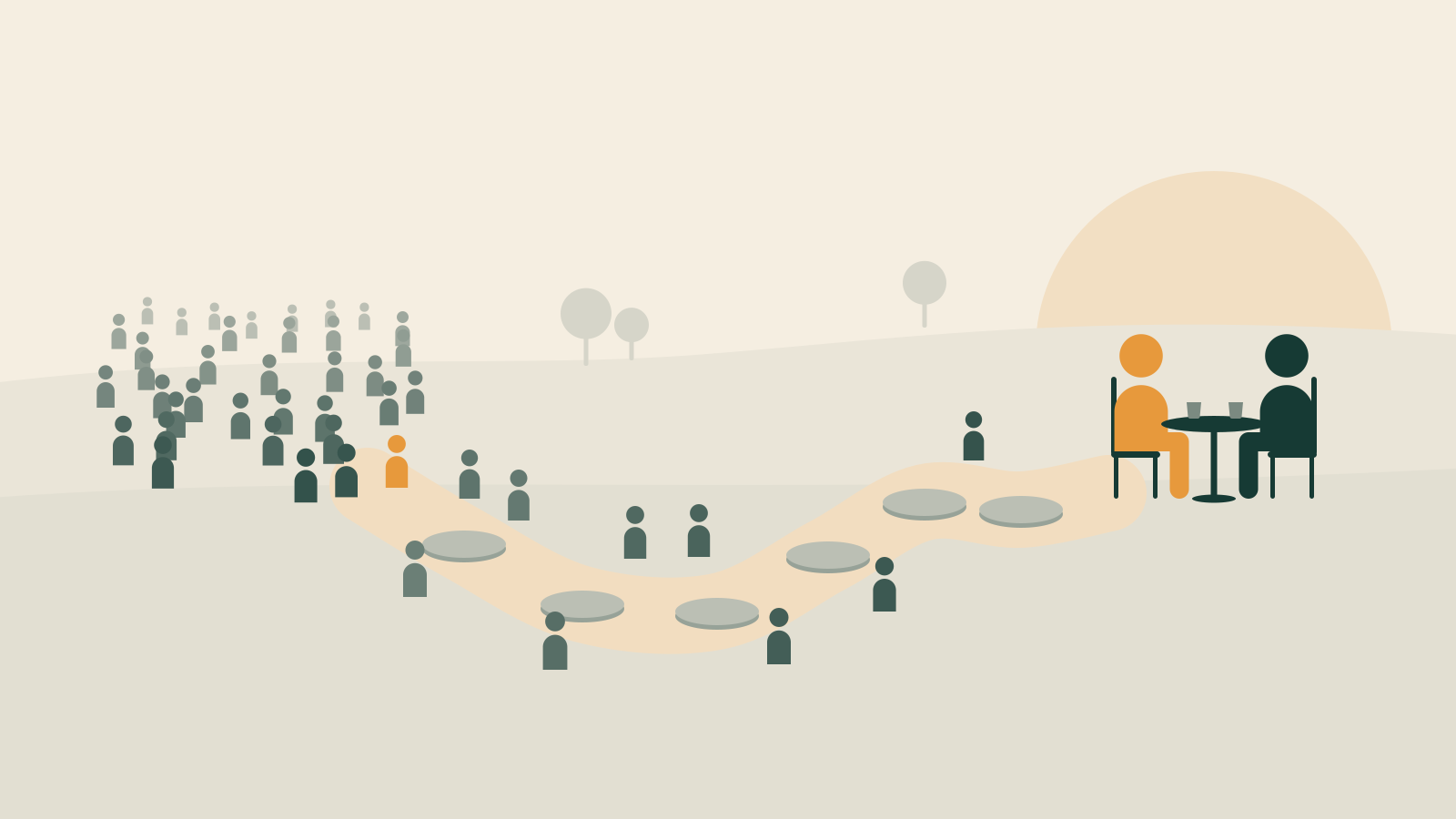
On Foundinity, you state what you need in a cofounder, and answer an assessment about how you work: commitment, working style, ambition, personality, goals, values, alongside your skills and interests. A multi-trait algorithm built on established psychological compatibility models ranks the people you see. You're not limited to whoever started in the same month and city as you.
What you know before you commit
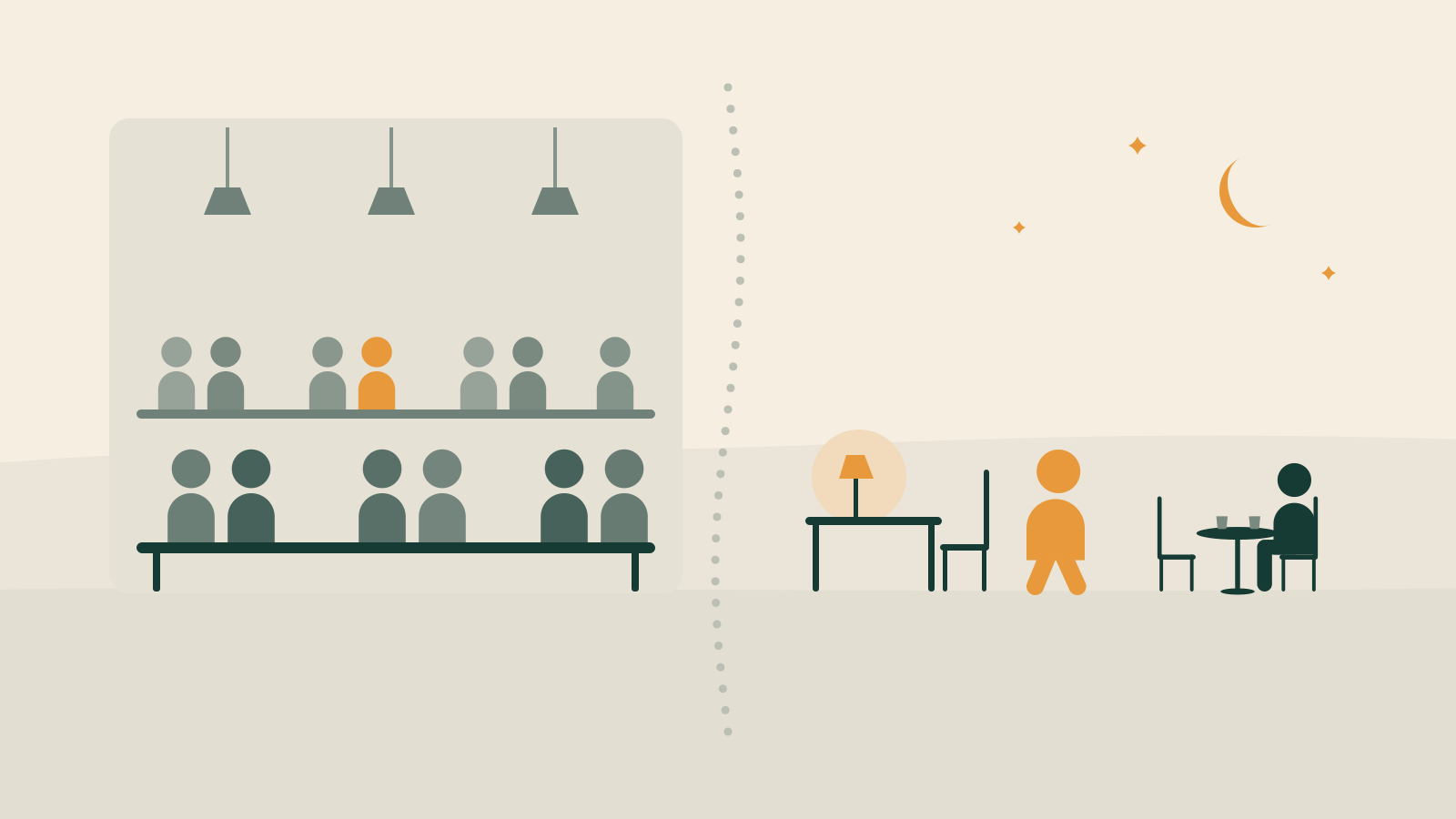
In a residency, you find out by working together. That's a good test, and Antler builds the program around it: you meet potential cofounders, "test dynamics" and build together, in its words. The limit is time. In the UK you have up to eight weeks to find the right person and show progress, and you can only test a handful of people properly in that window.
Every Foundinity match comes with a compatibility breakdown: where the two of you align and where you differ. If you differ on commitment or ambition, you know before the first call and can raise it early. Skills tell you who can do the job. The rest tells you who you can actually build with for years. After that, a short project together, done in the evenings, is still the best test.
Solo founders, and what happens without a team
Antler welcomes solo founders into its residencies. Its UK FAQ says "Most people join Antler solo". The same answer starts with "We don't invest in solo founders", and says the goal of the residency is to form a complementary founding team. The UK page also says that "Some founders in every cohort don't make it through to investment. That's deliberate."
Peh's numbers from her 2020 Singapore cohort show what that looks like: out of more than 90 individuals, 15 teams made it to demo day. Hers was one of them; her team had joined as an existing company.
On Foundinity, the 10-day clock applies to each match, not to your search. If one match doesn't work, you move on to the next compatible person. There's no cohort end date and nobody is cut.
When the next residency starts
Antler's residencies run on dates that differ by country. Its cohort start dates page lists, for example, Australia from 8 February 2027, Korea and Nigeria from 15 March 2027, and Kenya from 22 March 2027, with rolling intake in Canada, the US and the Nordics (checked 8 November 2026). The UK page still named a September 2026 start as the next one. In India, Antler says the next residency "will be announced soon", and points solo founders to Before Day Zero, an invite-only community that helps people find a cofounder.
Foundinity has no start date. You can begin the assessment today.
What participants say
Jane Peh's account is positive overall: she said she never regretted joining and valued the access to investors, mentors and batchmates. She also called the program "brutal", said the work was full-time and hectic, and noted that "you fight for the resources" because partners have limited time for many founders.
Hers is one account from one cohort in 2020, and Antler's format has changed since. Read several first-person accounts from recent cohorts in the city you're considering before you leave a job for it.
Using both: match first, then apply as a team
Antler takes complete teams too. In the UK, founders with complete teams typically join for six weeks with an immediate start, and its pages say some join with an MVP already in motion. So one route is to find your cofounder on Foundinity while you're still employed, test it on a small project, and apply to Antler as a team when you're both ready to go full-time.
That way you skip the hardest part of the residency, pairing up against the clock, and arrive with someone you've already worked with. For the first calls, use our questions to ask a potential cofounder.
Cost
Foundinity is free to get started, with 5 likes a week, up to 3 active matches and up to 3 profile saves. Plus costs $5 a week or $15 a month (₹300 or ₹1,000 in India) and adds 15 likes a week, unlimited active matches, a list of everyone who liked you and up to 5 profile saves.
Antler's main cost to you is full-time commitment: weeks in an office, no freelancing on the side, and in most cases leaving your job before you know whether you'll find a team.
Which one fits your situation
You're employed and want to look first. Foundinity. Antler's own page tells explorers not to apply; Foundinity's exploring status is made for this.
You can't work in the country where the residency runs. Foundinity works from anywhere. Antler's UK and US residencies both require the right to work there.
You're a solo founder. You can join Antler alone, but it invests in teams. On Foundinity, being solo is the starting point, and you leave with a match.
You've already found your cofounder. A residency's complete-team track may suit you. If you haven't tested how you work together, a Foundinity compatibility breakdown gives you a structured place to start that conversation.
You're experienced, ready to quit now and want to raise venture money soon. That's who Antler is built for. Consider finding your cofounder first, so you arrive as a team.
Your conversations keep fading after one or two calls. The 10-day clock on every Foundinity match pushes it to a call or a clear no.
Which should you use?
If you want to find a cofounder before you give up your income, use Foundinity. You start with people ranked by compatibility, see where you align and differ on every match, and keep your job while you look.
If you're set on Antler, use Foundinity first: find someone you work well with, try a small project, and apply together.
For a similar program, see Entrepreneur First vs Foundinity. For a broader view of where to look, see our guide on how to find a cofounder.
FAQ
Is Antler worth it?
It depends on whether you can go full-time now. If you're ready to leave your job, can work in the residency's country and want to raise venture money, a residency puts you in a room with people doing the same. If you want to look before you quit, Antler's UK page itself says explorers shouldn't apply.
What do Antler reviews say?
First-person accounts praise access to investors, mentors and peers, and describe the residency as intense and full-time, with evaluation from day one. In one 2020 Singapore cohort of more than 90 people, 15 teams reached demo day.
How hard is it to get into Antler?
Antler says it backs fewer than 1% of applicants in the UK. Its Continental Europe page says about 2% of applicants are invited to the residency there.
Do I need a cofounder to join Antler?
No. Antler says most people join solo. Its UK page also says it doesn't invest in solo founders, so the aim is to form a team during the residency.
Is Antler full-time?
Yes. In the UK, founders usually spend 4 to 6 days a week in person, and the page says Antler isn't a side project and there's no freelancing alongside it.
Can I keep my job during Antler?
Antler's pages say no: it expects you to be all in, with "No freelancing. No safety nets." If you need to keep working while you look, Foundinity lets you search with an exploring status.
How long is the Antler residency?
In the UK, up to eight weeks for solo founders and incomplete teams, and about six for complete teams. In Continental Europe, the cofounder matching track is about ten weeks. In the US, residents work in person for up to three months.
Does Antler invest in solo founders?
Its UK page says "We don't invest in solo founders." Solo founders can join, and the residency is designed to help them form a team.
What happens if you don't find a cofounder at Antler?
Antler says some founders in every cohort don't reach investment, by design. If it doesn't invest, its UK page says you stay part of its community and can reapply.
Is Antler an accelerator?
Antler says it isn't. It calls itself an inception-stage investor that runs residencies.
Antler vs Y Combinator: what's the difference?
Antler runs residencies where individuals can form teams. Y Combinator funds companies that apply, and its FAQ says it regularly accepts solo founders; its batch runs in person in San Francisco for three months. For people without a cofounder, YC runs a free cofounder matching platform, which we compare in YC cofounder matching vs Foundinity.
Antler vs Entrepreneur First: what's the difference?
Both are selective, full-time programs where individuals form teams, and both invest in the teams that form. Entrepreneurs First assesses people early in their careers and moves funded teams to San Francisco. Antler says many of its founders have ten or more years of experience, and its residency lengths vary by country. See Entrepreneur First vs Foundinity.
How is Foundinity different from Antler?
Antler is a residency you apply to and join full-time, where you pair up with people in your cohort. Foundinity is a matching platform you use from wherever you are: you take an assessment, see people ranked by compatibility, and get a compatibility breakdown and a 10-day clock on every match.
Can I find a cofounder on Foundinity and then apply to Antler?
Yes. Antler takes complete teams, and in the UK they typically join for six weeks with an immediate start.
Is Foundinity free?
It's free to get started, with 5 likes a week and up to 3 active matches. Plus is $5 a week or $15 a month.
How long does it take to find a cofounder?
Usually months. The full answer covers what speeds it up.
Sources
- Antler UK (antler.co/location/uk), Continental Europe (antler.co/continental-europe), US (antler.co/location/us), Nordics (antler.co/location/sweden), India (antler.co/location/india), cohort start dates (antler.co/cohort-start-dates) and global FAQ (antler.co/faq), checked 8 November 2026.
- Y Combinator FAQ (ycombinator.com/faq), checked 8 November 2026.
- Jane Peh, "My experience with Antler, a global early-stage VC investing in people", Medium, 20 May 2021.
- Foundinity plans and how it works: foundinity.com, checked 8 November 2026.